
What Is Gig Work? 15 Gig Jobs Beyond Food Delivery and Driving
Explore the diverse world of gig work in India, from app testing and local verification to transcription and research.

What Is Gig Work? 15 Gig Jobs Beyond Food Delivery and Driving
When most people hear gig economy, they think of food delivery, ride-hailing, or driving. Those are highly visible forms of gig work, but the gig economy is much broader.
Today, people can earn by testing apps, verifying local businesses, transcribing audio, labeling AI data, tutoring students, conducting market research, helping small businesses with admin work, creating content, or working at weekend events.
Many of these gigs can be done:
- without owning a car or bike;
- without quitting a full-time job;
- from a smartphone or laptop;
- for a few hours in the evening;
- on weekends;
- locally in your own city.
This guide explains what gig work means, how India's gig economy is evolving, 15 gig jobs beyond delivery and driving, realistic earning models, skills to build, how to find opportunities through platforms such as PTEarn, and how to avoid common scams.
What Is Gig Work?
Gig work is short-term, assignment-based, project-based, or on-demand paid work outside the traditional permanent-job model.
A gig worker may be paid:
- per task;
- per shift;
- per hour;
- per project;
- per approved test;
- per survey;
- per lead;
- per completed visit;
- per successful onboarding.
Examples:
- An app tester may be paid for each approved usability test.
- A verification worker may be paid for each completed store visit.
- A freelancer may charge per article or design.
- An event worker may be paid per shift.
- A merchant outreach worker may receive fixed pay plus incentives.
The main idea is flexible, outcome-based work.
Gig Work in India: Key Facts
India's gig economy is already substantial.
NITI Aayog's report India's Booming Gig and Platform Economy estimated that India had about 7.7 million gig workers in 2020-21 and projected that the number could rise to about 23.5 million by 2029-30.
The report projected that gig workers could represent around:
- 6.7% of the non-agricultural workforce, and
- 4.1% of total livelihoods/workforce
by 2029-30.
NITI Aayog also estimated that gig work was spread across skill levels:
- about 31% low-skilled;
- about 47% medium-skilled;
- about 22% high-skilled.
This is an important reality check: gig work is not only delivery or driving. It includes sales, clerical work, computing, education, professional services, retail, research, and many other occupations.
India's legal framework has also evolved. The Code on Social Security, 2020 came into force on 21 November 2025, and government information states that it includes definitions and provisions relating to gig and platform workers.
The Ministry of Labour and Employment's e-Shram portal also covers unorganised workers, including gig and platform workers. A government update in August 2026 reported more than 31.89 crore registrations on the portal.
Gig Worker vs Platform Worker
A gig worker generally performs short-term or task-based work outside a traditional long-term employment relationship.
A platform worker is typically someone whose work is matched, facilitated, or managed through an online platform.
For example:
- A photographer hired directly for a one-day restaurant shoot may be a gig worker.
- A worker accepting verification assignments through an app is doing platform-mediated gig work.
Platform work is therefore part of the broader gig economy.
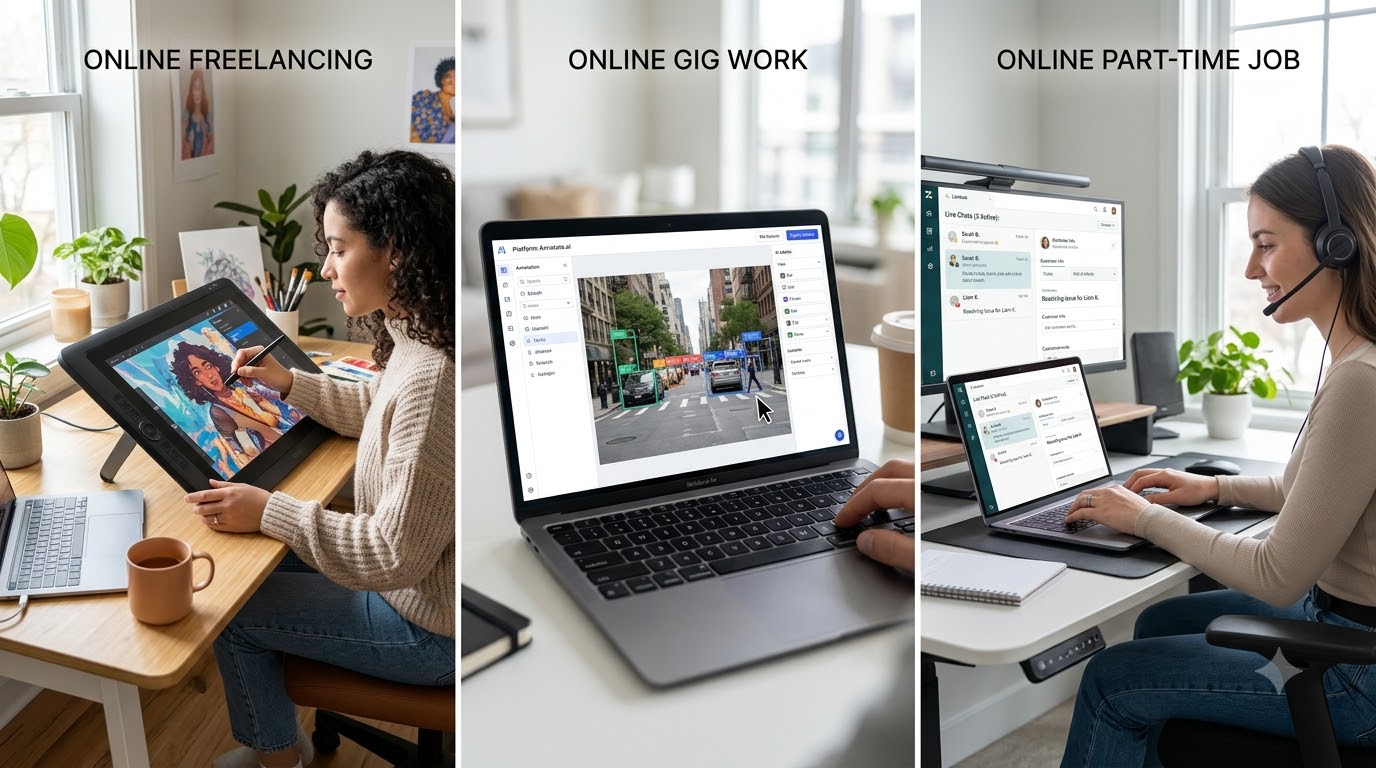
Gig Work vs Part-Time Jobs vs Freelancing
| Model | Typical relationship | Payment style | Example |
|---|---|---|---|
| Gig work | Task or assignment based | Per task/project/shift | Business verification |
| Part-time job | Ongoing employer relationship | Hourly/monthly | Weekend retail associate |
| Freelancing | Independent client work | Per hour/project | Freelance designer |
| Platform work | Work facilitated by an app | Per task/order/job | App-based audit |
A freelancer can also be a gig worker, but not every part-time employee is a gig worker.
15 Gig Jobs Beyond Delivery and Driving
The earning figures below are illustrative planning ranges, not guaranteed income. Actual rates depend on city, skill, client, platform, task complexity, travel, and demand.
1. App and Website Testing
Companies need users to test websites and apps for usability and bugs.
Typical tasks:
- create an account;
- test navigation;
- search for a product;
- attempt checkout;
- record the screen;
- explain what feels confusing;
- report a bug.
You do not always need coding skills.
Better bug reporting
Instead of:
Checkout is broken.
Write:
On Android, after entering the delivery PIN code and tapping Continue, the loading indicator remains visible and the payment screen does not open.
Tips
- Follow test instructions exactly.
- Mention device and browser details.
- Record reproducible steps.
- Never invent bugs.
- Test only within the authorised scope.
Common payment model: per test, per session, per bug, or hourly QA work.
2. Transcription and Captioning
Transcription means turning recorded speech into written text.
Possible work includes:
- interviews;
- lectures;
- podcasts;
- meetings;
- customer calls;
- subtitles;
- research recordings.
Workers may be paid per audio minute, audio hour, or project.
Important trick
One hour of audio does not equal one hour of work.
A 60-minute recording may take several hours depending on:
- audio quality;
- number of speakers;
- accents;
- technical vocabulary;
- timestamps;
- proofreading requirements.
Always listen to a sample before accepting a fixed-price transcription job.
3. Virtual Assistance
Virtual assistants help professionals and small businesses with administrative tasks.
Common tasks:
- email organisation;
- calendar management;
- spreadsheet updates;
- online research;
- customer follow-ups;
- order tracking;
- document formatting;
- lead management.
Beginner tip
Do not advertise:
I can do everything.
Offer a specific package, such as:
Five hours each weekend updating customer leads, organising enquiries, and preparing Monday follow-up lists.
Clear services are easier to sell.
4. Data Entry and Data Cleanup
Real business data work often involves more than typing.
Tasks can include:
- updating product catalogs;
- cleaning spreadsheets;
- removing duplicates;
- standardising phone numbers;
- entering invoice data;
- categorising records;
- updating CRM information.
Skills that increase your value:
- Excel;
- Google Sheets;
- filters;
- sorting;
- data validation;
- lookup functions;
- CSV handling.
A person who can clean and validate data is more useful than someone who only types.
Scam warning
Be cautious of "data entry jobs" asking for registration fees, software deposits, or penalty-based contracts.
5. AI Data Labeling and Model Evaluation
AI systems often need human reviewers.
Gig workers may:
- label images;
- categorise text;
- annotate audio;
- compare two AI responses;
- rate relevance;
- review search results;
- identify objects;
- check whether an answer follows instructions.
Key skill
Accuracy matters more than speed.
Many platforms use hidden quality checks, so guessing can reduce your approval rate.
6. Online Research and Research Assistance
Businesses and consultants often need structured research.
Tasks may include:
- competitor lists;
- supplier research;
- product comparisons;
- market mapping;
- contact research;
- public-data collection;
- summarising documents.
Good research should be:
- current;
- traceable;
- organised;
- source-backed.
Better output example
Instead of sending a raw list of "50 restaurants in Pune," create columns for:
| Business | Area | Category | Website | Public contact | Source | Checked on |
|---|
Structured research is more valuable.
7. Content Writing
Businesses need:
- blog posts;
- product descriptions;
- website copy;
- social captions;
- FAQs;
- marketplace listings;
- short scripts.
Beginner strategy
Choose one or two niches instead of writing about everything.
Examples:
- ecommerce;
- technology;
- local businesses;
- education;
- fashion;
- travel.
Build 3–5 strong samples.
Common payment model: per article, per word, per project, or monthly package.
8. Graphic Design and Short-Video Editing
Small businesses constantly need digital content.
You can offer:
- social posts;
- banners;
- menus;
- thumbnails;
- reels editing;
- short videos;
- event posters;
- product-image edits.
Start with small offers
Instead of:
Full digital marketing package.
Offer:
- five Instagram posts;
- three short-form videos;
- one menu design;
- ten product-image edits.
Small packages are easier to price and sell.
9. Online Tutoring
Tutoring can be a strong skill-based gig.
Subjects may include:
- mathematics;
- science;
- English;
- coding;
- accounting;
- spoken English;
- Excel;
- interview skills.
Example
If you charge ₹400 for a one-hour session and teach four hours over a weekend:
₹400 × 4 = ₹1,600 gross
This is an example, not a guaranteed rate.
Batch trick
Four students paying ₹250 each for a shared session generate:
4 × ₹250 = ₹1,000 per session
Group teaching can improve earnings per hour where appropriate.
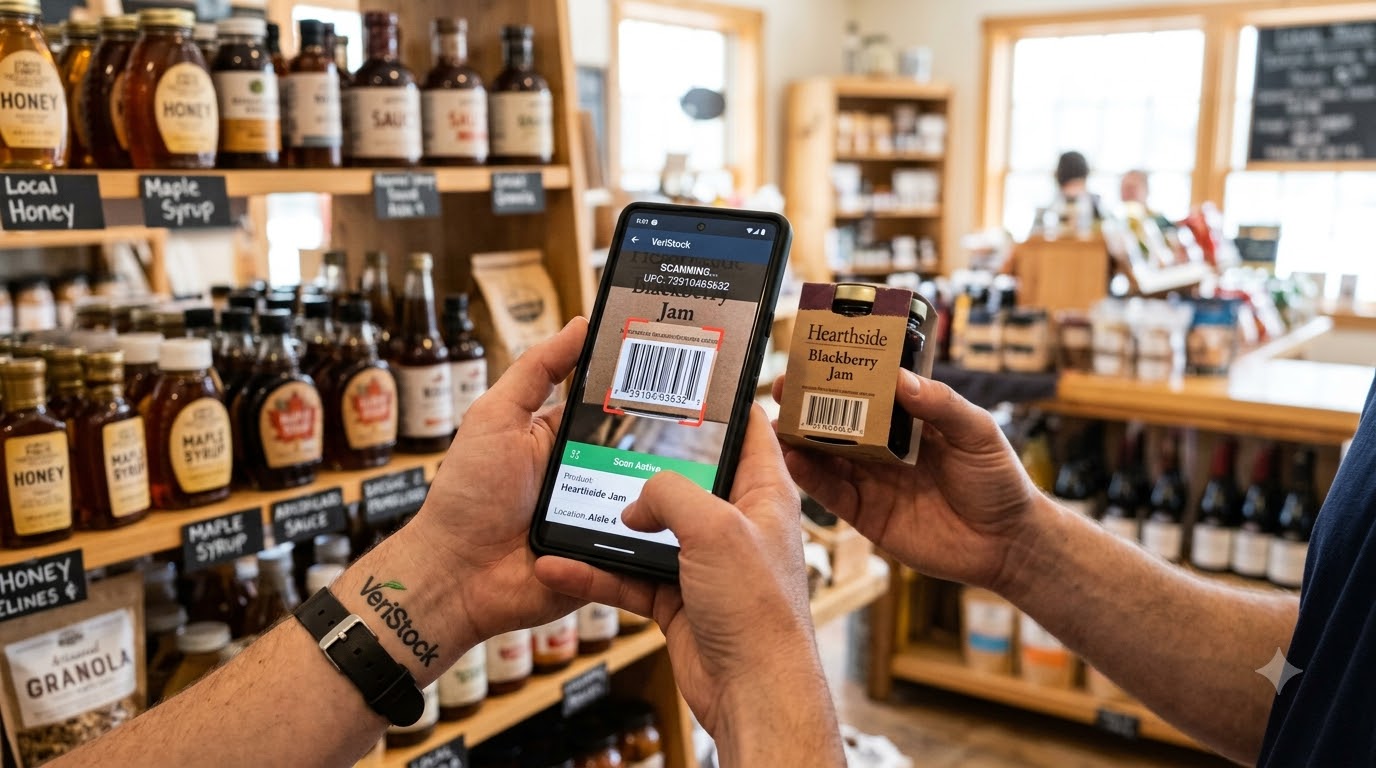
10. Local Business Verification
Verification gigs may require visiting a shop or business and confirming:
- address;
- storefront name;
- opening hours;
- phone number;
- signage;
- available products;
- required photographs.
You may need only:
- smartphone;
- GPS;
- mobile data;
- camera.
Route-planning trick
Do not judge a gig only by payout.
Three ₹200 tasks in the same market may be more profitable than one ₹500 task 15 km away.
Think in terms of:
net earnings per hour and payout per kilometre.
11. Mystery Shopping and Retail Audits
Mystery shoppers or field auditors evaluate real customer experiences.
Tasks may include:
- visiting a store;
- checking service quality;
- verifying promotions;
- observing product placement;
- noting waiting time;
- completing an audit form.
If a purchase is required
Confirm:
- reimbursement limit;
- receipt requirement;
- reimbursement timeline;
- whether purchase cost is separate from your task fee.
Never spend significant money based only on a WhatsApp promise.
12. Merchant Acquisition and Business Outreach
Platforms need people who can contact local businesses.
You may speak with:
- restaurants;
- salons;
- retailers;
- gyms;
- coaching institutes;
- service providers.
Tasks can include:
- explaining a platform;
- collecting business details;
- helping with registration;
- demonstrating an app;
- following up.
Possible payment structures:
- fixed daily pay;
- per visit;
- per qualified lead;
- per successful onboarding;
- fixed + incentive.
Sales trick
Do not begin with a long pitch.
Start with a question:
"Do you currently get customers through online platforms?"
Listen first, then explain the relevant benefit.
13. Event Staffing
Events often require temporary workers for:
- registration desks;
- exhibitions;
- ushering;
- ticketing;
- conferences;
- sports events;
- product launches;
- promotional campaigns.
This can suit students and weekend workers.
Confirm before accepting
- venue;
- reporting time;
- shift duration;
- compensation;
- dress code;
- food;
- travel reimbursement;
- payment date.
Reliability can lead to repeat assignments.
14. Local Photography and Content Capture
Businesses may need photos of:
- storefronts;
- menus;
- products;
- properties;
- events;
- retail displays.
A modern smartphone may be enough for some assignments.
Five practical tips
- Clean your camera lens.
- Use good natural light.
- Keep vertical lines straight.
- Avoid unnecessary digital zoom.
- Name and organise files correctly.
Do not photograph private or restricted areas without permission.
15. Surveys and Market-Research Field Work
Market-research companies need real-world information.
Tasks may include:
- consumer surveys;
- short interviews;
- price checks;
- competitor checks;
- store observations;
- product feedback;
- telephone questionnaires.
A good field researcher should:
- remain neutral;
- follow sampling rules;
- record responses accurately;
- respect privacy;
- never fabricate interviews.
Research firms may validate data through timing, location, callbacks, or consistency checks.
Quick Comparison of the 15 Gig Jobs
| Gig | Work mode | Beginner friendly? | Main requirement |
|---|---|---|---|
| App testing | Remote | Yes | Smartphone/laptop |
| Transcription | Remote | Yes | Typing + listening |
| Virtual assistance | Remote | Yes | Organisation |
| Data entry | Remote | Yes | Accuracy |
| AI data labeling | Remote | Yes | Attention to detail |
| Online research | Remote | Yes | Research skills |
| Content writing | Remote | Yes | Writing |
| Design/video editing | Remote | Yes | Creative tools |
| Tutoring | Remote/Local | Yes | Subject knowledge |
| Business verification | Field | Yes | Smartphone + travel |
| Mystery shopping | Field | Yes | Observation |
| Merchant outreach | Field/Phone | Yes | Communication |
| Event staffing | Field | Yes | Reliability |
| Photography | Field | Yes/Intermediate | Camera/phone |
| Market research | Field/Remote | Yes | Communication |
How Much Can Gig Workers Earn?
There is no fixed gig-work salary.
Earnings depend on:
- city;
- skill;
- experience;
- demand;
- client budget;
- platform rules;
- travel;
- equipment costs;
- platform fees;
- approval criteria.
Use:
Net Gig Income = Gross Payout - Direct Work Expenses
Then:
Net Hourly Rate = Net Gig Income ÷ Total Time Spent
Include travel, waiting, reporting, uploads, and revisions.
Example
Payout: ₹800
Travel and other direct costs: ₹180
Total time: 4 hours
Net:
₹800 - ₹180 = ₹620
Net hourly rate:
₹620 ÷ 4 = ₹155/hour
A smaller remote task may sometimes produce a better hourly rate than a larger field payout.
How to Find Gig Work on PTEarn
PTEarn can help users discover flexible work based on current listings.
Availability varies by city, employer, category, and time.
1. Complete Your Profile
Keep your:
- city;
- skills;
- availability;
- work interests;
- experience;
- languages
accurate and current.
2. Search by Category
Do not search only for "part-time jobs."
Explore categories such as:
- Microtasks;
- Field Work;
- Remote Work;
- Digital Skills;
- Creator Economy;
- Future of Work;
- Part-Time Jobs.
3. Search by City
For field gigs, location strongly affects profitability.
A lower-paying nearby task may produce better net earnings.
4. Read the Full Listing
Check:
- payout;
- requirements;
- deadline;
- location;
- equipment;
- reimbursement;
- approval criteria;
- client/employer details.
5. Use Alerts When Available
If a city or job page offers a notification or interest feature, use it for categories you care about.
6. Track Your Results
Maintain your own record:
| Date | Gig | Payout | Expense | Hours | Net/hour |
|---|
After several weeks, your data will show which gigs are actually worth your time.
A 4-Week Beginner Gig Experiment
Week 1
Try one simple gig, such as app testing, verification, or data work.
Track payout, time, expense, and difficulty.
Week 2
Try a different category.
If Week 1 was field work, try remote work.
Week 3
Repeat the better category and improve efficiency.
Week 4
Compare:
- net income;
- income per hour;
- stress;
- payment reliability;
- repeatability;
- skills gained.
Choose based on evidence, not hype.
How to Grow From Small Gigs
Gig work becomes more valuable when one skill leads to another.
Local-business path
Verification → merchant outreach → business-profile assistance → local digital marketing
Technology path
App testing → bug reporting → manual QA → automation testing
AI path
Basic labeling → quality review → specialised annotation → AI evaluation
Creative path
Image editing → social posts → video editing → recurring content package
Content path
Data entry → product listings → content writing → ecommerce management
The goal is not to remain forever at the lowest-value task.
Gig Work Scam Checklist
Avoid "pay to unlock work"
Be cautious about:
- registration fees;
- security deposits;
- task activation charges;
- recharge-to-earn schemes;
- guaranteed placement fees.
Never share financial secrets
Do not share:
- UPI PIN;
- OTP;
- CVV;
- card PIN;
- internet-banking password.
No legitimate recruiter needs your UPI PIN to pay you.
Be careful with unknown APK files
Do not install random apps sent by recruiters unless you have independently verified the organisation and distribution method.
Protect identity documents
Do not casually send Aadhaar, PAN, bank statements, or selfies with IDs through informal channels.
Use official verification processes when documents are genuinely required.
Demand clear task terms
Before meaningful work, confirm:
- deliverable;
- payout;
- deadline;
- payment date;
- approval criteria;
- reimbursement.
Safety Tips for Field Gigs
When visiting businesses or unfamiliar areas:
- verify the address before travelling;
- keep your phone charged;
- carry a power bank;
- tell someone where you are going;
- use safe public routes;
- follow photography rules;
- do not enter private areas without permission;
- leave if a situation feels unsafe.
No payout is worth unnecessary personal risk.
Five Productivity Tricks
1. Batch Similar Tasks
Group nearby field visits or similar digital tasks.
2. Use Checklists
Create a reusable checklist so you do not miss required evidence.
3. Track Time
A ₹300 gig that takes three hours may not be worth repeating.
4. Save Templates
Keep templates for reports, client questions, invoices, and research tables.
5. Review Weekly
Ask:
Which gig gave me the highest net income per hour?
Optimise around the answer.
Gig Work for Full-Time Employees
If you already have a job, check your employment agreement for:
- moonlighting rules;
- conflict-of-interest restrictions;
- confidentiality clauses;
- competitor restrictions;
- intellectual-property rules.
Never use your employer's confidential information, source code, customer lists, paid software, laptop, or office time for unrelated gig work unless authorised.
Gig Work and Taxes in India
Gig income may still be taxable.
The treatment can depend on:
- nature of work;
- annual income;
- TDS;
- expenses;
- turnover;
- tax regime;
- GST applicability.
Keep:
- invoices;
- payout records;
- receipts;
- expense records;
- contracts.
For substantial freelance or gig income, consult a qualified tax professional.
e-Shram and Gig Workers
Government information states that e-Shram registers unorganised workers, including gig and platform workers, and provides a Universal Account Number on a self-declaration basis.
As of August 2026, government reporting showed more than 31.89 crore registrations on the portal.
Eligibility for specific schemes can vary, so check current rules on official government websites.
Government information also states that e-Shram registration is free. Be cautious of anyone claiming that a fee guarantees government benefits.
Frequently Asked Questions
What is gig work in simple words?
Gig work is short-term or task-based paid work rather than a traditional permanent job.
Is gig work the same as freelancing?
They overlap, but gig work is broader. It can include freelance projects, field tasks, audits, surveys, event shifts, testing, and platform assignments.
Do I need a vehicle?
No. Many gigs can be done remotely or locally without driving.
What are good beginner gigs?
Depending on eligibility and skills, app testing, data work, verification, event staffing, surveys, transcription, and virtual assistance can be accessible starting points.
Can students do gig work?
Yes, subject to age, eligibility, platform terms, and applicable laws.
Can I work only on weekends?
Yes. Event staffing, tutoring, field verification, creative work, and freelance projects can fit weekend schedules.
How much can I earn?
There is no guaranteed figure. Calculate net earnings per hour after travel, expenses, platform deductions, and time.
Which gigs can grow into careers?
Examples include app testing to QA, merchant outreach to sales, content writing to marketing, data labeling to AI evaluation, and design to recurring creative services.
Are gig workers recognised under Indian law?
The Code on Social Security, 2020, in force from 21 November 2025, includes definitions and provisions relating to gig and platform workers.
Can gig workers use e-Shram?
Government information states that e-Shram covers unorganised workers, including gig and platform workers, subject to applicable eligibility requirements.
Does PTEarn provide gig opportunities?
PTEarn can help users discover flexible opportunities based on current listings. Availability, selection, eligibility, and payout depend on each job or task.
Final Takeaway
Gig work is much bigger than food delivery or driving.
You can earn through:
- a smartphone;
- a laptop;
- communication skills;
- subject knowledge;
- creativity;
- local knowledge;
- attention to detail.
A strong starting strategy is:
- choose one or two gig categories;
- start with small assignments;
- calculate your true net hourly rate;
- complete tasks professionally;
- build evidence of reliability;
- learn a skill that increases your value;
- move toward better-paying repeat work.
The gig economy is increasingly about solving a specific problem for someone and getting paid for completing it well.
For PTEarn users, keep your profile current, explore multiple categories, check opportunities by city, read every listing carefully, and never compromise your safety for quick money.
Sources and Data Notes
The India-specific workforce and social-security facts in this article were checked against official sources available before publication.
NITI Aayog — India's Booming Gig and Platform Economy: Perspectives and Recommendations on the Future of Work (2022)
https://www.niti.gov.in/node/375
Used for the 7.7 million gig-worker estimate for 2020-21, 23.5 million projection for 2029-30, and the skill-level distribution.Press Information Bureau / Ministry of Labour & Employment — Social Security Measures for Gig and Platform Workers (4 December 2025)
https://www.pib.gov.in/PressReleasePage.aspx?PRID=2198746
Used for the enforcement date of the Code on Social Security, 2020 and gig/platform-worker provisions.Press Information Bureau / Ministry of Labour & Employment — 5 Years of e-Shram Portal (25 August 2026)
https://www.pib.gov.in/PressReleasePage.aspx?PRID=2303053
Used for the more than 31.89 crore e-Shram registrations reported in August 2026.
Earnings Disclaimer
All earning examples and ranges are illustrative, not guarantees. Actual earnings depend on the platform, employer, client, location, skill level, demand, task complexity, approval criteria, expenses, taxes, incentives, and time required.
PTEarn is an opportunity-discovery platform. Gig availability varies by city and time. Eligibility, selection, payout, conditions, and payment terms depend on each listing. Always verify an opportunity before beginning work, paying money, travelling, purchasing items, or sharing sensitive information.
Looking for flexible earning opportunities?
Explore part-time jobs and microtasks available on PTEarn.
Keep Reading
Local Business Verification Jobs: A New Kind of Flexible Gig Work
Earn money by completing local business verification tasks such as checking store locations, opening hours, photos, menus, and product availability.
Freelancing vs Gig Work vs Part-Time Jobs: Which Type of Flexible Work Suits You?
An in-depth comparison of freelancing, gig work, and part-time jobs to help you choose the best fit for your lifestyle.

Weekend Part-Time Jobs in India: Flexible Work for Saturdays and Sundays
Discover the most profitable weekend part-time jobs in India for those with packed weekday schedules.