
Local Business Verification Jobs: A New Kind of Flexible Gig Work
Earn money by completing local business verification tasks such as checking store locations, opening hours, photos, menus, and product availability.
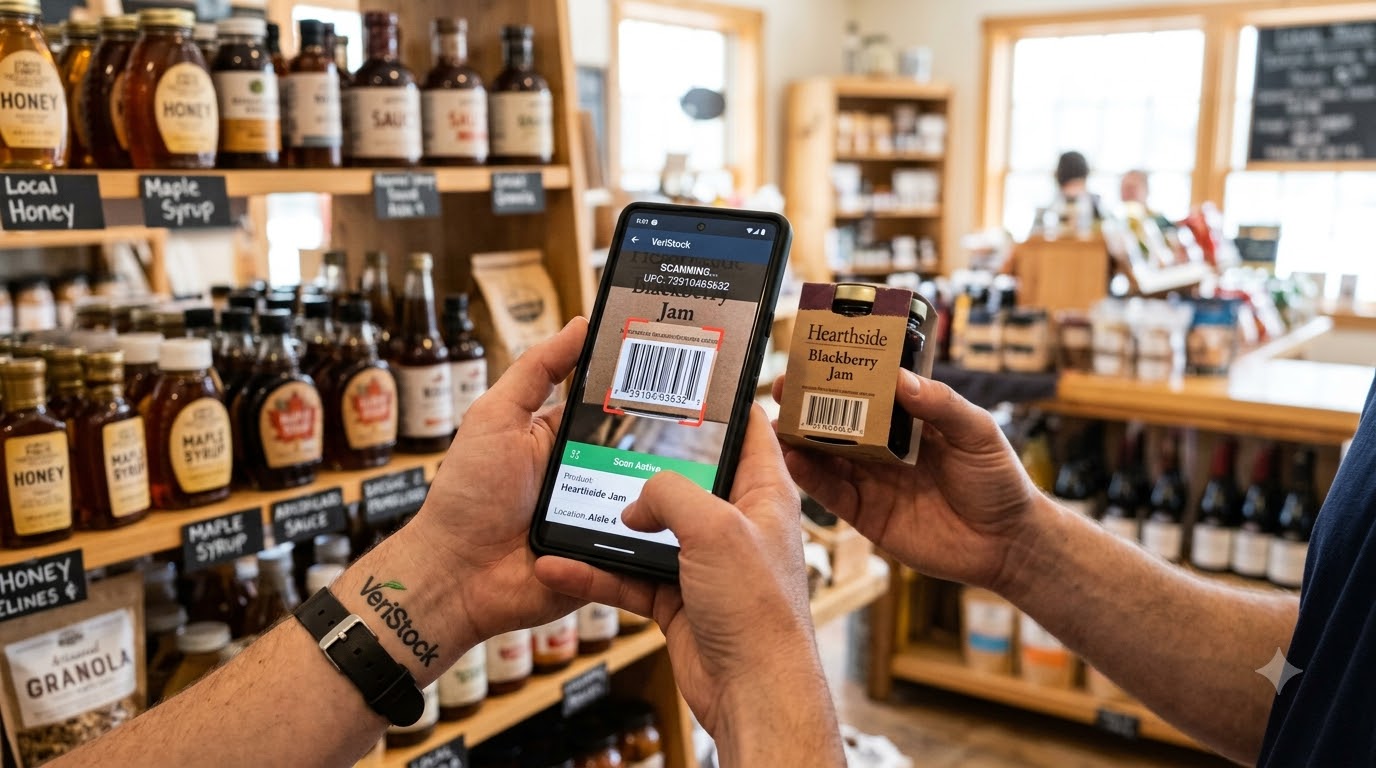
Local Business Verification Jobs: A New Kind of Flexible Gig Work
What if earning extra money did not require sitting in front of a laptop for four hours, delivering food all evening, or learning a complicated new skill?
Sometimes a paid gig can be as simple as visiting a nearby shop, confirming that it exists, checking its opening hours, taking a few permitted photos, recording whether a product is available, and submitting the information through an app.
This type of work is commonly called local business verification, field verification, retail audit, store audit, merchant verification, mystery audit, or location verification.
It is part of a broader shift toward task-based work in India. According to the Economic Survey 2025-26, the number of gig workers in India increased by 55% between FY2020-21 and FY2024-25. An earlier NITI Aayog study estimated about 7.7 million gig workers in 2020-21 and projected that the gig workforce could reach 23.5 million by 2029-30.
That does not mean every field-verification opportunity is legitimate or profitable. The real skill is learning how to find genuine tasks, calculate whether a task is worth accepting, collect evidence correctly, and avoid the mistakes that cause submissions to be rejected.
This guide explains the complete process.
Important distinction: Google Maps allows users and Local Guides to suggest edits, add photos, check facts, and update information such as business hours. However, Google's Local Guides programme rewards contributions with points, levels, badges, and certain benefits—not normal cash payments. Paid verification gigs are generally separate assignments offered by employers, research firms, audit companies, merchant-acquisition companies, mapping/data vendors, gig platforms, or their contractors.
What Is a Local Business Verification Gig?
A local business verification gig is a short field assignment in which a worker is asked to visit a specified location and collect evidence about that business.
The person assigning the task may want to know:
- Does the business actually exist at the listed address?
- Is it currently open or permanently closed?
- What are its opening and closing hours?
- Is the phone number displayed at the shop correct?
- What category of business is it?
- Is a particular product or brand available?
- What is the current price of a product?
- Is promotional material displayed?
- Does a restaurant have an updated menu?
- Is a merchant interested in joining a digital platform?
- Is a store following a company's merchandising guidelines?
- Has a new branch opened at the claimed location?
The worker becomes the eyes and ears on the ground.
Digital databases can become outdated. Shops relocate. Restaurants change menus. Phone numbers stop working. Businesses close. New stores open. Product displays change.
That creates a need for fresh, location-specific information.
Google's own help documentation, for example, allows contributors to check facts about places and update missing information such as business hours, phone numbers, closures, and other details. Google Business Profile also emphasizes the importance of accurate hours, location, phone, website, photos, products, and services.
Paid field-verification work applies a similar idea commercially: someone needs trustworthy real-world data, and a worker collects it according to a defined task.
Why This Type of Gig Work Is Growing
India's cities contain an enormous number of restaurants, salons, chemists, grocery stores, boutiques, repair shops, gyms, clinics, coaching centres, cafés, manufacturers, wholesalers, and other small businesses.
At the same time, more commerce is being organised digitally.
Online marketplaces need merchant information. Delivery platforms need restaurant data. Brands need retail audits. Financial-service companies may need business checks. Research companies need market intelligence. Location-data companies need accurate storefront information.
This creates a simple problem:
A database can tell you what was true yesterday. A person standing outside the shop can tell you what is true right now.
That is why local verification can become a useful category of flexible field work.
It is also well suited to a task-based model because many assignments can be divided into small units:
Visit → verify → capture evidence → submit → review → payment.
What Do You Actually Do During a Verification Task?
The exact requirements depend on the assignment, but common activities include the following.
1. Storefront Verification
You may be asked to visit an address and take a clear photograph showing:
- shop name;
- signboard;
- entrance;
- building or shop number;
- nearby landmark;
- surrounding area.
The objective is usually to prove that the business exists at the specified location.
Good evidence
A photo showing the complete storefront and business sign together.
Weak evidence
A close-up of only the signboard with no indication that you actually reached the location.
2. Business Hours Verification
You may need to confirm:
- opening time;
- closing time;
- weekly closing day;
- lunch break;
- holiday schedule.
Whenever possible, use the method specified in the task.
For example, the task may require:
- visible operating hours on the storefront;
- confirmation from an authorised staff member;
- a photograph of displayed timings.
Never guess.
If the shopkeeper says, "We usually open around 10," record that according to the task instructions instead of converting it into an invented exact time.
3. Menu Collection
Restaurants frequently change prices, dishes, combos, and availability.
A task may require photographs of:
- front page;
- full menu;
- beverages;
- special offers;
- price list.
Trick
Before taking ten random photos, check whether every menu section is readable.
One sharp image is more useful than three blurry images.
4. Product Availability Check
A brand or research company may want to know whether a particular item is being sold in a store.
You could be asked to verify:
- product present/not present;
- size;
- colour;
- pack size;
- selling price;
- stock status;
- shelf placement;
- competing products.
This starts to resemble a retail audit.
5. Promotional Display Verification
Companies sometimes run local advertising or merchandising campaigns.
Workers may verify whether:
- a poster is installed;
- a standee is visible;
- a branded refrigerator is present;
- a shelf display follows instructions;
- promotional pricing is displayed.
Your job is usually to document what exists—not to improve or rearrange the shop unless the task specifically authorises it.
6. Business Contact Verification
A task may ask you to validate the business phone number or obtain a business contact.
Be careful with privacy.
Collect only the information specifically required for the assignment. Do not photograph private documents, personal chats, customer information, IDs, bank details, or payment credentials merely because they happen to be visible.
Who Can Do Local Verification Work?
One attractive feature of field-verification work is that many assignments do not require a specialised degree.
It may suit:
- college students;
- people looking for weekend work;
- delivery partners who already travel through commercial areas;
- salespeople;
- freelancers;
- homemakers seeking flexible local work;
- retired professionals;
- people between jobs;
- workers who prefer outdoor tasks to desk work.
The most valuable qualities are usually much simpler:
- reliability;
- punctuality;
- attention to detail;
- ability to follow instructions;
- basic smartphone skills;
- polite communication;
- accurate reporting.
You are not being paid merely to "go somewhere."
You are being paid to return usable evidence.
What Equipment Do You Need?
For most basic verification gigs, a small field kit is enough.
Minimum kit
- Smartphone with a working camera
- Mobile data connection
- GPS/location services
- Charged battery
- Task app or browser
- A small notebook or notes app
Useful additions
- Power bank
- Charging cable
- Water bottle
- Two-wheeler helmet if travelling by bike
- Rain protection during monsoon
- Pen
- Phone mount if you navigate frequently
A ₹500 power bank can sometimes be more useful to a field worker than an expensive accessory because a dead phone can mean an incomplete task.
How to Find Local Business Verification Jobs
Finding these gigs requires different search terms from traditional employment.
If you only search for "part-time jobs", you may miss them.
Try searching for terms such as:
- local business verification;
- field verification;
- field audit;
- retail audit;
- store audit;
- merchant verification;
- mystery shopping;
- location verification;
- market survey;
- field survey;
- merchant onboarding;
- field executive;
- field associate;
- data collection;
- store visit;
- product availability audit.
These are related categories, although the work requirements can differ.
How to Find Verification Work on PTEarn
PTEarn is designed around part-time, flexible, gig, and local earning opportunities, so your search should be based on location + task type, not only a traditional job title.
A practical workflow is:
Step 1: Keep Your Location Accurate
Make sure your city or preferred work location is correct.
Field gigs are highly local. A ₹100 task 2 km away can make sense; the same task 20 km away may not.
Step 2: Explore Field Work and Related Categories
Look for opportunities labelled with terms such as:
- Field Work
- Verification
- Business Outreach
- Merchant Acquisition
- Local Gigs
- Surveys
- Audits
- Mystery Shopping
Task names will vary between employers.
Step 3: Read the Entire Assignment Before Applying
Do not apply only because the headline says "Earn ₹___."
Check:
- exact or approximate location;
- reward;
- number of visits;
- deadline;
- estimated task duration;
- evidence required;
- eligibility;
- whether travel is reimbursed;
- approval conditions.
Step 4: Use Interest or Notification Features When Available
If no verification assignment is currently available in your city, use a Notify Me, job-interest, or similar option whenever PTEarn provides one.
Local campaigns can be temporary. A city may have zero tasks today and multiple tasks later.
Step 5: Build a Good Completion Record
If a platform or employer tracks task quality, workers who consistently submit accurate evidence may be better positioned for future assignments.
Your goal should not be:
"How many tasks can I accept?"
It should be:
"How many tasks can I complete correctly?"
The Most Important Calculation: Net Earnings, Not Task Price
A field task should never be evaluated only by its advertised payout.
Use this formula:
Net earning = Task payout - Travel cost - Parking/tolls - Other task costs
Then calculate:
Effective hourly earning = Net earning ÷ Total time spent
Example
Imagine three hypothetical verification tasks in the same market:
- Task A: ₹100
- Task B: ₹100
- Task C: ₹100
Total advertised reward = ₹300
Suppose:
- travel = ₹50;
- parking = ₹20;
- total time = 2 hours.
Then:
Net earning = ₹300 - ₹50 - ₹20 = ₹230
Effective earning:
₹230 ÷ 2 = ₹115 per hour
Now imagine the same three jobs are spread across opposite sides of the city and take five hours.
The advertised ₹300 has not changed, but the economics have.
The Route-Stacking Trick
The strongest field workers learn to cluster tasks geographically.
Instead of:
Task → home → task → home → task
Try:
Area A → Task 1 → Task 2 → Task 3 → return
A lower-paying nearby task can sometimes be more profitable than a higher-paying distant task.
Before You Accept a Task: The 60-Second Check
Before tapping Apply or Accept, answer these questions:
- Where exactly is the task?
- How far is it from me?
- What is the payout?
- What proof is required?
- Can I complete it before the deadline?
- Does it require speaking to the owner?
- Does it require permission for photos?
- Is any purchase required?
- Is travel reimbursed?
- What causes rejection?
If the task description does not make an important requirement clear, do not invent your own rule.
A Professional Verification Workflow
Use the following process for almost every field-verification assignment.
Stage 1: Read
Read the complete task before starting your journey.
Screenshot or save the essential instructions if the platform allows it.
Pay particular attention to words such as:
- mandatory;
- all;
- front view;
- timestamp;
- GPS;
- authorised person;
- receipt;
- minimum;
- exact;
- before/after.
One missed requirement can make an otherwise genuine visit unusable.
Stage 2: Plan
Open the location before leaving.
Check:
- distance;
- route;
- estimated travel time;
- business operating hours;
- nearby tasks.
If you have multiple assignments, create a route.
Stage 3: Arrive and Confirm the Location
Before interacting with anyone, confirm that you are at the correct business.
Compare:
- name;
- address;
- landmark;
- shop number;
- map pin;
- task instructions.
Many field errors happen because two businesses have similar names.
Stage 4: Introduce Yourself Clearly
If interaction is required, keep your explanation short and professional.
For example:
"Hello, I am completing a business-information verification assignment. I only need to confirm a few basic details such as your operating hours and, if permitted, take a photo of the storefront."
Do not pretend to be:
- a government officer;
- a platform employee if you are not one;
- a bank representative;
- an inspector;
- a customer if the task does not call for mystery shopping.
Honesty protects both you and the business.
Stage 5: Collect Only Required Data
Use the assignment checklist.
If it asks for five fields, collect five accurate fields.
Do not turn a two-minute verification into a twenty-minute interview.
Stage 6: Capture Strong Evidence
Before pressing the shutter:
- clean the camera lens;
- stand still;
- avoid digital zoom if possible;
- make sure the signboard is readable;
- avoid glare;
- include context;
- check the photo immediately.
The Two-Photo Technique
When allowed, capture:
- Context photo — shows the whole storefront and surroundings.
- Evidence photo — clearly shows the required detail.
For example, one photo may prove the location while another makes the operating-hours board readable.
Follow the task's photo limits and requirements.
Stage 7: Review Before Leaving
This is one of the best rejection-prevention tricks.
Stand outside the location for 30 seconds and review:
- Are all mandatory photos present?
- Are they sharp?
- Did I record the correct hours?
- Did I confirm open/closed status?
- Did I answer every required question?
- Is the GPS/location evidence complete?
- Did I miss the shop number?
Discovering an error while you are still outside the store is cheap.
Discovering it after travelling 8 km home is expensive.
Stage 8: Submit as Soon as Practical
If the task requires GPS or on-location submission, submit before leaving.
Otherwise, submit soon afterward while the information is still fresh.
Do not rely on your memory at the end of the day.
The Golden Rule: Never Fabricate Evidence
Suppose you arrive and the business is closed.
Do not:
- mark it open;
- reuse an old photo;
- upload a picture from the internet;
- guess the hours;
- claim you spoke to the owner;
- photograph another shop.
A professional verification worker reports reality.
If the business is temporarily closed, record the evidence according to the task instructions.
If the address does not exist, report location not found if that option is provided.
If staff refuse permission, report the refusal.
A failed verification attempt can still provide valuable information.
Fake evidence destroys trust.
How to Take Verification Photos That Get Accepted
Photo quality is one of the most controllable parts of field work.
Do
- clean your camera lens;
- use the rear camera when possible;
- hold the phone horizontally or vertically as instructed;
- show the complete signboard;
- keep text readable;
- include the storefront entrance;
- check focus;
- capture adequate light;
- obey any timestamp/GPS requirements;
- take photos only where permitted.
Avoid
- blurry images;
- screenshots instead of field photos;
- extreme zoom;
- photos taken from a moving vehicle;
- images dominated by your finger;
- unrelated people as the main subject;
- edited evidence unless editing is specifically allowed;
- reused photos from another assignment.
Pro Tip
Your photo should answer the reviewer’s question without requiring a long explanation.
If the reviewer wants proof that "ABC Medical Store exists at this location," the ideal image should make that obvious immediately.
How to Ask a Shopkeeper Questions Without Annoying Them
Field workers are often interacting with people who are busy.
Use short, closed questions.
Instead of:
"Can you tell me about your business?"
Ask:
"What time do you open?"
"What time do you close?"
"Are you open on Sunday?"
"Is this product currently available?"
"May I photograph the menu for this verification assignment?"
This produces cleaner data and takes less time.
What If the Business Owner Says No?
Respect the answer.
Never argue, pressure, threaten, or secretly photograph restricted areas.
Depending on the assignment:
- photograph only the public storefront;
- record "owner refused";
- contact task support;
- submit the permitted evidence;
- move to the next task.
A refusal is information.
Common Reasons Verification Tasks Get Rejected
Even genuine work may not be approved if the evidence does not meet the task requirements.
Common causes include:
Wrong location
The worker visited a similarly named shop.
Blurry photograph
The required text cannot be read.
Missing mandatory photo
Four out of five photos were submitted.
Incorrect GPS
The upload was made far from the required location when on-site verification was mandatory.
Incomplete answers
One required field was left blank.
Contradictory information
The form says "store closed" while the photograph clearly shows active customers.
Old or reused evidence
The same photo appears across different tasks.
Missed deadline
The visit was correct but submitted too late.
Unauthorised data
The worker collected information outside the permitted scope.
The solution is simple:
Read → collect → review → submit.
Create a Personal Field Note Template
When several visits are scheduled, details can become confusing.
Use a simple note format:
Task ID:
Business:
Area:
Arrival time:
Status: Open / Closed / Not Found
Opening time:
Closing time:
Weekly off:
Phone verified:
Required product available:
Photos captured:
Owner/staff confirmation:
Special note:
Submitted:
Do not store unnecessary personal information.
Delete temporary notes after they are no longer required.
The 5-Minute Rule for Faster Field Work
Do not waste ten minutes organising yourself after reaching the shop.
Before arriving, know:
- what you need to photograph;
- what you need to ask;
- what you need to enter;
- what you need to submit.
For a simple task, your objective should be to spend your time collecting evidence, not rereading the job description on the pavement.
Build a “Verification Zone” Around Your Routine
One of the best ways to make small local gigs worthwhile is to combine them with travel you are already doing.
Examples:
- college → market → home;
- office → nearby commercial area → metro;
- delivery route → verification → next delivery zone;
- gym → high street → home.
This reduces incremental travel cost.
However, do not accept a verification task if completing it will interfere with another employer's rules or create a conflict of interest.
How to Decide Whether a Task Is Worth It
Use a quick score.
Rate each item from 1 to 5:
| Factor | 1 | 5 |
|---|---|---|
| Distance | Far | Very close |
| Payout | Low | Strong |
| Time | Long | Quick |
| Instructions | Unclear | Very clear |
| Approval risk | High | Low |
| Route value | Isolated | Near other tasks |
A task with a high total score is usually a better candidate.
This is not a guarantee of profit, but it prevents impulsive acceptance.
How Beginners Can Build a Good Reputation
Your first objective should be accuracy, not speed.
For your first few assignments:
- accept fewer tasks;
- read every instruction twice;
- avoid distant locations;
- choose daytime visits;
- review every image;
- keep notes;
- submit early.
After you understand the workflow, improve your route efficiency.
A worker who completes 5 correct tasks can be more valuable than someone who accepts 15 and returns 8 unusable submissions.
Field Safety Matters More Than Any Gig
A ₹100 or ₹500 assignment is never worth risking your safety.
Basic precautions
- Prefer daylight for unfamiliar locations.
- Tell someone where you are going when appropriate.
- Do not enter restricted or suspicious premises.
- Follow road-safety rules.
- Do not use your phone while riding or driving.
- Avoid confrontations.
- Leave immediately if a situation becomes unsafe.
- Do not carry large amounts of cash unnecessarily.
- Keep emergency contacts available.
If a task requires behaviour that feels illegal, deceptive, unsafe, or significantly different from the published assignment, stop and seek clarification through the platform or employer.
Protect the Business Owner's Privacy
Verification is not surveillance.
Do not unnecessarily capture:
- Aadhaar cards;
- PAN cards;
- bank documents;
- customer records;
- private invoices;
- card details;
- OTPs;
- personal WhatsApp chats;
- CCTV screens;
- children;
- identifiable customers who are irrelevant to the assignment.
If a sensitive item appears accidentally in a photo and the task does not need it, retake the photo where possible.
Collect the minimum data required to complete the legitimate task.
How to Avoid Fake Verification Jobs
Unfortunately, scammers also use the words task, part-time, verification, and work from home.
India's Indian Cyber Crime Coordination Centre (I4C) has warned about fake task-style jobs that lure people with easy earnings, demand registration or software fees, collect personal/financial information, and later deny withdrawals or demand additional payments.
Treat the following as major red flags:
- "Pay ₹499 to activate jobs."
- "Deposit money before you can withdraw earnings."
- "Buy a premium task package."
- "Send your UPI PIN."
- "Share your OTP."
- "Pay tax to unlock your salary."
- "Guaranteed ₹5,000 per day for 30 minutes of work."
- "Transfer money to receive a higher-value task."
- "Recruit three people before withdrawal."
- "Install this unknown APK outside the app store."
Rule: A Job Should Pay You
Be extremely cautious when someone asks you to pay simply to receive work.
Some legitimate business arrangements can involve normal expenses, certifications, or purchases, but those should be transparent, independently verifiable, and relevant to the work—not a mysterious payment to unlock earnings.
Never share:
- UPI PIN;
- ATM PIN;
- CVV;
- net-banking password;
- OTP.
If you believe you have been the victim of financial cyber fraud in India, the official cybercrime system advises reporting it through the National Cyber Crime Reporting Portal and calling 1930 for financial fraud.
Google Maps Verification vs Paid Verification Jobs
This distinction is important.
Google Maps allows people to:
- add missing places;
- suggest edits;
- add photos;
- answer questions;
- check facts;
- update business information.
Google's Local Guides programme awards points for such contributions. For example, Google's current help documentation lists points for reviews, photos, edits, places added, and facts checked.
That is different from a company offering you a paid assignment to verify a business.
So if someone says:
"Google will pay you ₹500 for every Maps review—send ₹1,000 registration first"
treat the claim with extreme suspicion.
Do not confuse community contribution programmes with paid gig contracts.
A Day in the Life of a Local Verification Worker
Imagine you live near a busy commercial area.
At 9:00 AM you check available tasks and find:
- pharmacy verification — 1.2 km away;
- café menu audit — 1.5 km away;
- clothing store display check — 1.7 km away.
Instead of visiting each on separate days, you plan one loop.
10:00 AM
Reach the pharmacy.
Confirm the signboard, address, and operating hours.
Review your photos before leaving.
10:20 AM
Walk or ride to the café.
Ask permission to photograph the current menu.
Check every page before submitting.
10:45 AM
Visit the clothing store.
Verify the required promotional display.
Capture one context image and the required close-up.
11:10 AM
Submit final task and return.
The key idea is not the exact timings or payouts—those vary by assignment.
The lesson is route density.
Three tasks in one neighbourhood can be much more efficient than three scattered tasks.
Advanced Trick: Track Your Real Performance
After 20-30 tasks, you can understand which gigs are actually worth your time.
Create a simple sheet with:
| Date | Task | Area | Payout | Travel Cost | Minutes | Approved? | Net |
|---|---|---|---|---|---|---|---|
| 6 Sep | Store audit | Sector A | ₹___ | ₹___ | ___ | Yes/No | ₹___ |
Then calculate:
- approval rate;
- average payout;
- average travel cost;
- average completion time;
- net earning per hour;
- best-performing neighbourhood.
You may discover that the task with the highest advertised reward is not your most profitable type of work.
Advanced Trick: Learn the Difference Between “Task Time” and “Total Time”
Platforms may describe a job as a 10-minute task.
That may refer only to time spent at the location.
Your real time may include:
- reading instructions;
- travelling;
- finding parking;
- locating the shop;
- waiting for staff;
- collecting evidence;
- uploading data;
- travelling back.
Always measure door-to-door effort when evaluating your earnings.
Advanced Trick: Create Your Own Quality Checklist
Before submitting any verification:
- Correct location
- Correct business
- All questions answered
- Mandatory photos captured
- Photos readable
- GPS requirement satisfied
- No fabricated information
- Permission obtained where needed
- No unnecessary private information
- Submission completed before deadline
This 20-second habit can save you an entire repeat visit.
Can Local Verification Become a Regular Side Income?
Potentially, but availability is usually campaign-dependent.
Some weeks may have many tasks. Other weeks may have none.
Do not treat a newly discovered gig category as guaranteed salary until you have personally tracked:
- task availability;
- approval rate;
- payout reliability;
- travel cost;
- time required.
The strongest strategy is usually to build a portfolio of flexible earning options.
For example:
- local verification;
- app testing;
- data-labeling;
- digital marketing gigs;
- tutoring;
- merchant outreach;
- weekend event work.
Then choose opportunities according to your location, skills, schedule, and economics.
What About e-Shram and Gig Workers?
India has been expanding formal recognition and social-security infrastructure for unorganised, gig, and platform workers.
The Ministry of Labour & Employment's e-Shram portal includes gig and platform workers in its National Database of Unorganised Workers.
In January 2026, the Ministry also reported that its aggregator module had onboarded major platforms including companies in delivery, mobility, ecommerce, and local services.
Eligibility and benefits can depend on the applicable rules and worker category, so workers should use official government sources for current guidance rather than relying on social-media claims.
Frequently Asked Questions
Do I need a bike?
Not always.
Some tasks can be completed on foot, bicycle, public transport, metro, or scooter.
The correct question is:
Does the travel cost make sense compared with the payout?
Do I need to buy products?
Only if the task explicitly requires a purchase and clearly explains reimbursement or compensation.
Never make an unplanned purchase simply because a shopkeeper suggests it.
Do I need photography skills?
Professional photography is rarely required for basic verification.
You do need:
- focus;
- readable text;
- correct framing;
- sufficient light;
- proof of the required subject.
Can I work only on weekends?
For some assignments, yes.
But verify business hours and task deadlines before accepting.
Can I do verification while working as a delivery partner?
Potentially, if the assignments fit your route and do not violate your primary platform's rules or delay another customer's order.
Never compromise one job to complete another.
What if the business has permanently closed?
Report the actual situation according to the task instructions.
Do not mark it active merely to complete the form.
Can I take photos without asking?
A storefront visible from a public place is different from photographing inside a private business.
Follow local law, platform instructions, business rules, and reasonable privacy expectations. If an interior photo, employee photo, document photo, or restricted-area photo is required, obtain appropriate permission.
How much can I earn?
There is no universal rate.
Payment can vary based on:
- city;
- distance;
- complexity;
- client;
- urgency;
- number of questions;
- type of evidence;
- visit duration;
- whether a purchase is required;
- campaign budget.
Do not trust articles that promise a fixed income without explaining these variables.
Evaluate each assignment using net earnings and effective hourly earnings.
Final Checklist: From Finding the Task to Getting It Approved
Before accepting
- Check location.
- Check payout.
- Estimate travel cost.
- Read evidence requirements.
- Check deadline.
- Understand rejection conditions.
Before leaving home
- Charge phone.
- Enable mobile data.
- Carry power bank.
- Open navigation.
- Group nearby tasks.
At the business
- Confirm correct shop.
- Introduce yourself when interaction is required.
- Ask only necessary questions.
- Take clear, permitted photos.
- Record facts accurately.
Before leaving
- Review every photo.
- Check every required field.
- Confirm GPS/location requirement.
- Retake weak evidence.
After the visit
- Submit promptly.
- Keep only permitted records.
- Track payout and approval.
- Learn from rejected tasks.
Conclusion
Local business verification is a good example of how flexible work is changing.
You are not necessarily selling a product, writing code, delivering food, or sitting at a desk. You are helping convert real-world observations into reliable digital information.
The work can be simple, but doing it professionally requires discipline.
The best verification workers learn five things:
- Choose nearby tasks intelligently.
- Read the instructions before travelling.
- Collect strong evidence instead of large amounts of evidence.
- Never fabricate information.
- Calculate net earnings after travel and time.
For students, delivery workers, freelancers, and people who prefer active local work, verification tasks can become a useful addition to a broader flexible-work strategy.
Explore Field Work, Verification, Local Gigs, Business Outreach, and related opportunities on PTEarn when they are available in your city—and judge every opportunity by its legitimacy, instructions, distance, and real earning potential.
Sources and Further Reading
This article uses publicly available information for general educational purposes. Task availability, payment, eligibility, platform policies, and legal requirements can change.
Economic Survey 2025-26 / Press Information Bureau — Employment and Gig Work
https://www.pib.gov.in/PressReleasePage.aspx?PRID=2219940&lang=1®=3NITI Aayog — India's Booming Gig and Platform Economy: Perspectives and Recommendations on the Future of Work
https://www.niti.gov.in/sites/default/files/2023-02/25th_June_Final_Report_27062022.pdfGoogle Maps Help — Contribute to Google Maps and Check Facts
https://support.google.com/maps/answer/6304221?co=GENIE.Platform%3DAndroid&hl=enGoogle Maps Help — Local Guides Points, Levels and Badging
https://support.google.com/maps/answer/6225851?co=GENIE.Platform%3DDesktop&hl=en-INGoogle Business Profile Help — Business Information on Google Search and Maps
https://support.google.com/business/answer/7039811?hl=en-INIndian Cyber Crime Coordination Centre — Advisory on Fake Task/CAPTCHA-Filling Job Fraud
https://cybercrime.gov.in/Webform/theme/resources/advisories/ADVISORY%20TAU-ADV-004_Captcha%20Filling%20Fraud_08.04.2025.pdfNational Cyber Crime Reporting Portal
https://www.cybercrime.gov.in/Ministry of Labour & Employment — e-Shram Portal
https://eshram.gov.in/about-e-shram-portal
Disclaimer: PTEarn provides information and access to flexible-work opportunities. Availability, compensation, eligibility, and task conditions depend on the individual employer or campaign. Always review the complete assignment before applying or travelling. Never pay an unknown person merely to unlock a job, and never share an OTP, UPI PIN, ATM PIN, CVV, or banking password.
Looking for flexible earning opportunities?
Explore part-time jobs and microtasks available on PTEarn.
Keep Reading

Field Gig Jobs in India: Flexible Work Beyond an Office or Laptop
Learn about the growing market for field gig jobs, including local business verification, audits, and mystery shopping.

Business Outreach Jobs: How Local Brand and Merchant Acquisition Gigs Work
A deep dive into business outreach jobs and how you can earn by onboarding local merchants to digital platforms.

What Is Gig Work? 15 Gig Jobs Beyond Food Delivery and Driving
Explore the diverse world of gig work in India, from app testing and local verification to transcription and research.