PTEarn Projects: Post a Project and Get Work Done by Skilled Freelancers
Discover how PTEarn Projects connects people and businesses that need work done with freelancers who can find projects, submit bids, and build their freelance careers.

PTEarn Projects: A New Way to Find Freelance Work and Get Projects Done
Not every opportunity comes in the form of a traditional job.
Sometimes a business needs a website fixed.
A startup needs a logo.
A creator needs a video edited.
A shop owner needs product descriptions.
A company needs someone to clean and organize a spreadsheet.
A student may need help building a small project.
These are projects, not necessarily permanent jobs.
That is why PTEarn is expanding beyond traditional job discovery with PTEarn Projects.
With PTEarn Projects, a person or business can post a project from the PTEarn website, and freelancers can discover those projects through the PTEarn app and submit their bids.
This creates a simple connection between two sides:
People who need work done ↔ People who can do the work
What Is PTEarn Projects?
PTEarn Projects is a project marketplace designed to connect clients with freelancers.
A client can describe what they need, provide the project requirements, and publish the project.
Freelancers can then discover available projects in the PTEarn app, understand the requirements, and submit a bid if the project matches their skills.
For example:
"I need a simple business website built using React."
A freelancer with React experience can find the project and submit a proposal.
Another example:
"I need 100 product descriptions written for an online store."
A content writer can discover the project and bid for the work.
The project marketplace therefore creates another path for people to find online work.
Why Projects Are Different From Jobs
A traditional job usually involves an ongoing relationship.
A project is generally focused on a specific outcome.
For example:
Traditional job
Customer Support Executive
You may work continuously for a company and receive regular responsibilities and compensation.
Project
Create a customer-support FAQ page
You complete a defined task or deliverable.
Projects can therefore be useful for people who want to work on specific assignments rather than looking only for permanent employment.
They can also help businesses access specialized skills for individual requirements.
How PTEarn Projects Works
The basic workflow is simple.
Step 1: A Client Posts a Project
The project can be posted from the PTEarn website.
The client describes:
- What needs to be done
- Project requirements
- Expected deliverables
- Skills required
- Budget or expected compensation
- Timeline
- Any important instructions
The better the project description, the easier it becomes for freelancers to understand what is required.
Step 2: The Project Becomes Available to Freelancers
Once published and made available, the project can be discovered by freelancers using the PTEarn app.
Freelancers can look for projects that match their:
- Skills
- Experience
- Availability
- Preferred type of work
- Budget expectations
This turns the project listing into a potential source of freelance opportunities.
Step 3: Freelancers Review the Requirements
Before submitting a bid, freelancers should carefully read the project.
A freelancer should ask:
- Do I have the required skills?
- Do I understand the deliverables?
- Can I complete the work within the requested timeline?
- Is the expected compensation appropriate for the work?
- Are there any requirements I need clarification on?
A good bid starts with understanding the actual requirement.
Step 4: Freelancer Submits a Bid
If the project is suitable, the freelancer can submit a bid through the PTEarn app.
A bid can communicate things such as:
- Proposed price
- Expected completion time
- Relevant experience
- Approach to the project
- Questions or clarifications
For example:
"I can build the requested landing page using React and responsive CSS. I have experience creating responsive web interfaces and can provide the first version within the proposed timeline."
The purpose of a bid is not simply to provide a price.
It should help the client understand why the freelancer may be suitable for the project.
Step 5: The Client Reviews Bids
The client can review the bids received for the project.
Instead of looking only at the lowest price, clients may consider several factors:
- Relevant skills
- Previous experience
- Understanding of the requirement
- Proposed timeline
- Bid amount
- Quality of communication
- Portfolio or previous work, where available
The final selection remains with the client.
Step 6: Work Begins
Once the client and freelancer agree on the project terms, they can proceed with the work according to the agreed requirements.
The exact workflow may depend on the project and the parties involved.
Clear communication is important.
Before starting, both sides should understand:
- What will be delivered
- When it will be delivered
- What is included
- What is not included
- How revisions will be handled
- How payment will be handled
Clear expectations can prevent many misunderstandings later.
What Kind of Projects Can Be Posted?
Freelance projects can cover many different skills.
Some examples include:
Technology
- Website development
- Mobile app development
- Bug fixing
- API integration
- WordPress development
- Shopify development
- Database work
- Automation
- Software testing
Design
- Logo design
- Social media graphics
- UI/UX design
- Presentation design
- Banner design
- Product image design
Content
- Blog writing
- Product descriptions
- Copywriting
- Translation
- Proofreading
- Video scripts
Digital Marketing
- Social media management
- SEO assistance
- Digital marketing research
- Lead generation
- Email marketing
- Content planning
Business Support
- Data entry
- Spreadsheet work
- Web research
- Virtual assistance
- Data organization
- Documentation
These are only examples. A project can be posted for many different types of legitimate work.
For Clients: How to Write a Better Project
A project description should answer one simple question:
"What exactly do I need the freelancer to deliver?"
Instead of:
"Need website."
Write:
"I need a five-page responsive business website with Home, About, Services, Contact, and FAQ pages. The website should work on mobile and desktop. I will provide the logo and content. Please include the expected delivery time and your proposed price."
The second description gives freelancers enough context to understand the assignment.
Include Clear Deliverables
A project becomes easier to understand when deliverables are clearly defined.
For example:
Project
Create an Instagram content package
Deliverables
- 10 static posts
- 5 story designs
- Editable source files
- One revision round
This gives both sides a clearer understanding of the expected result.
Include a Realistic Timeline
If you need a project completed within a specific period, mention it in the project description.
For example:
"Expected completion: 7 days."
Freelancers can then decide whether they have enough availability.
A realistic timeline also helps avoid unnecessary pressure after the project starts.
For Freelancers: How to Write a Better Bid
A strong bid should be relevant to the project.
Avoid sending exactly the same message to every client.
For example, instead of:
"I am interested. Please hire me."
Try to explain:
- What you understood
- Why your skills match
- How you would approach the work
- Your expected timeline
- Your proposed price
For example:
"I understand that you need a responsive landing page for your business. I can build it using React with a mobile-first layout and reusable components. I have experience with responsive web interfaces and can deliver the first version within 4 days. My proposed bid is ₹X."
The client can then quickly understand the proposal.
Don't Bid on Every Project
Freelancers may be tempted to bid on everything.
That can be counterproductive.
Instead, focus on projects where:
- Your skills match
- You understand the requirements
- You can meet the deadline
- The project fits your availability
- You can provide useful value
A relevant bid is generally more meaningful than a large number of unrelated bids.
PTEarn Projects Can Also Help Beginners
Freelancing can be difficult for beginners because many opportunities ask for previous experience.
Project-based work can provide another way to build practical experience.
For example, a beginner learning graphic design could look for a small design project that matches their current ability.
Someone learning web development could look for a simple website project.
Someone with spreadsheet skills could look for data-related projects.
The important part is to be honest about your experience and only bid on work you can reasonably complete.
Build Your Freelance Portfolio
Every completed project can potentially become part of a freelancer's professional portfolio, subject to the client's permission and any applicable confidentiality restrictions.
A portfolio can demonstrate:
- What you have built
- What problems you solved
- Which technologies or tools you used
- What type of work you specialize in
Over time, a portfolio can make it easier for potential clients to understand your capabilities.
Projects Can Help Businesses Too
PTEarn Projects is not only about freelancers.
It can also be useful for small businesses, startups, creators, students, and individuals who need specific work completed.
Imagine a small business owner who needs:
- A landing page
- Product photos edited
- 50 product descriptions
- A spreadsheet organized
- A promotional video edited
Hiring someone for a permanent position may not make sense for every requirement.
A project-based approach can allow the client to define the work first and look for freelancers who are interested in completing that specific assignment.
Project vs Part-Time Job
These two opportunities can look similar, but they are different.
| Part-Time Job | Project |
|---|---|
| Usually ongoing | Usually defined scope |
| Regular responsibilities | Specific deliverables |
| May have recurring working hours | Often more flexible |
| Can continue for months | May end after completion |
| Employer/worker relationship | Client/freelancer relationship |
Neither model is suitable for every situation.
Choose based on the type of work and arrangement you are looking for.
How to Use PTEarn Projects as a Freelancer
If you are using the PTEarn app to find projects, build a routine.
1. Keep your profile updated
Make sure your skills and experience are accurate.
2. Check new projects regularly
New projects may appear over time.
3. Read before bidding
Do not bid without understanding the requirements.
4. Submit relevant proposals
Explain how your skills match the project.
5. Be realistic about timelines
Do not promise a delivery date you cannot meet.
6. Communicate clearly
Ask questions when requirements are unclear.
7. Build your reputation through quality work
Deliver what you agreed to deliver.
How to Use PTEarn Projects as a Client
If you want to post a project:
1. Define the problem
What do you actually need?
2. Describe the deliverable
What should the freelancer provide at the end?
3. Mention the required skills
For example:
React + Firebase
or:
Canva + social media design
4. Set expectations
Mention your preferred timeline and budget where possible.
5. Review bids carefully
Look at relevance, experience, approach, timeline, and price.
6. Clarify before starting
Make sure both sides understand the agreement.
Safety Matters for Both Sides
Online freelance work requires caution.
Clients and freelancers should avoid unnecessary sharing of sensitive information.
Be careful with:
- Requests for upfront payments outside agreed arrangements
- Suspicious links or files
- Requests for passwords or OTPs
- Requests to transfer money on behalf of another person
- Unrealistic promises
- Work that appears fraudulent or illegal
- Requests to use your account for suspicious transactions
If something does not look right, stop and verify it before continuing.
Never share passwords, OTPs, banking credentials, or other highly sensitive authentication information with a client or freelancer.
PTEarn Projects Is Not a Guaranteed Income Scheme
A project marketplace can provide access to potential freelance opportunities.
It cannot guarantee that every freelancer will receive a project or earn a particular amount.
The availability of projects and the outcome of bids can depend on:
- Skills
- Experience
- Portfolio
- Project requirements
- Competition
- Pricing
- Client preferences
- Availability of suitable projects
The goal is to create access to opportunities, not to promise a specific income.
A Simple Example
Imagine a local business needs a website.
The owner posts:
Project: Business Website
Requirement:
Create a responsive five-page website for a local business.
Skills:
HTML, CSS, JavaScript or React.
Timeline:
7 days.
Budget:
₹15,000.
A freelancer sees the project in the PTEarn app.
The freelancer reviews the requirement and submits:
Bid: ₹13,500
Timeline: 6 days
Experience: Responsive React websites
Proposal: Explains the planned approach and deliverables.
The client compares the bids and communicates with suitable freelancers.
If both parties agree on the terms, the project can move forward.
This is the basic idea behind PTEarn Projects.
From Job Search to Project Search
The traditional job search asks:
"Who is hiring?"
A project marketplace adds another question:
"Who needs something done?"
That difference can open another path for people with useful skills.
A person may not be ready for a full-time job.
A business may not want to hire a permanent employee.
But both may still have a reason to work together on a specific project.
That is where project-based work can fit.
PTEarn's Growing Opportunity Ecosystem
PTEarn is designed to bring different types of earning and career opportunities together.
Depending on the opportunity and eligibility, users may explore areas such as:
- Jobs
- Part-time work
- Microtasks
- Affiliate opportunities
- Freelance projects
PTEarn Projects adds another important category:
Projects that freelancers can discover and bid on.
The goal is to make opportunity discovery more accessible while helping people identify work that matches their skills.
Frequently Asked Questions
Who can post a project?
Individuals, businesses, startups, creators, and other legitimate clients can use the project-posting functionality, subject to PTEarn's applicable rules and eligibility requirements.
Where can clients post projects?
Projects can be posted through the PTEarn web experience.
Where can freelancers find projects?
Freelancers can discover available projects through the PTEarn app.
Can freelancers bid on projects?
Yes. Eligible freelancers can review available projects and submit bids when the project matches their skills and requirements.
Does the lowest bid automatically win?
No. A client may consider multiple factors, including skills, experience, proposal quality, timeline, and price.
Can beginners use PTEarn Projects?
Beginners can look for projects appropriate to their current skills and experience. They should accurately represent their abilities and avoid bidding on work they cannot reasonably complete.
Does PTEarn guarantee freelance work?
No. Project availability and selection depend on individual projects, client requirements, competition, and other factors.
What should I include in my bid?
A useful bid can include your understanding of the project, relevant skills or experience, proposed approach, estimated timeline, and price.
Your Skills Can Become Your Next Opportunity
A job application starts with an employer looking for a candidate.
A project bid starts with a client looking for someone who can solve a specific problem.
Both can lead to opportunities, but the way you approach them is different.
If you have a skill, ask yourself:
"What problems can I solve with this skill?"
If you need work done, ask:
"What specific result do I need?"
PTEarn Projects brings these two questions together.
Clients post projects. Freelancers discover projects. Freelancers bid. Clients choose. Work gets done.
And for someone building a freelance career, every relevant project can be another opportunity to learn, build experience, and develop a portfolio.
Explore Opportunities With PTEarn
Whether you are searching for a job, looking for part-time work, completing microtasks, exploring affiliate opportunities, or looking for freelance projects, the first step is finding an opportunity that matches what you can do.
With PTEarn Projects, project-based work becomes another part of that journey.
Don't just search for a job. Look for opportunities where your skills can create value.
Looking for flexible earning opportunities?
Explore part-time jobs and microtasks available on PTEarn.
Keep Reading

PTEarn Job Accelerator: A Practical Framework to Get Job-Ready and Find a Job Faster
A practical job-search framework for Indian job seekers covering resume optimization, LinkedIn, job discovery, applications, follow-ups, interview preparation, and common mistakes.
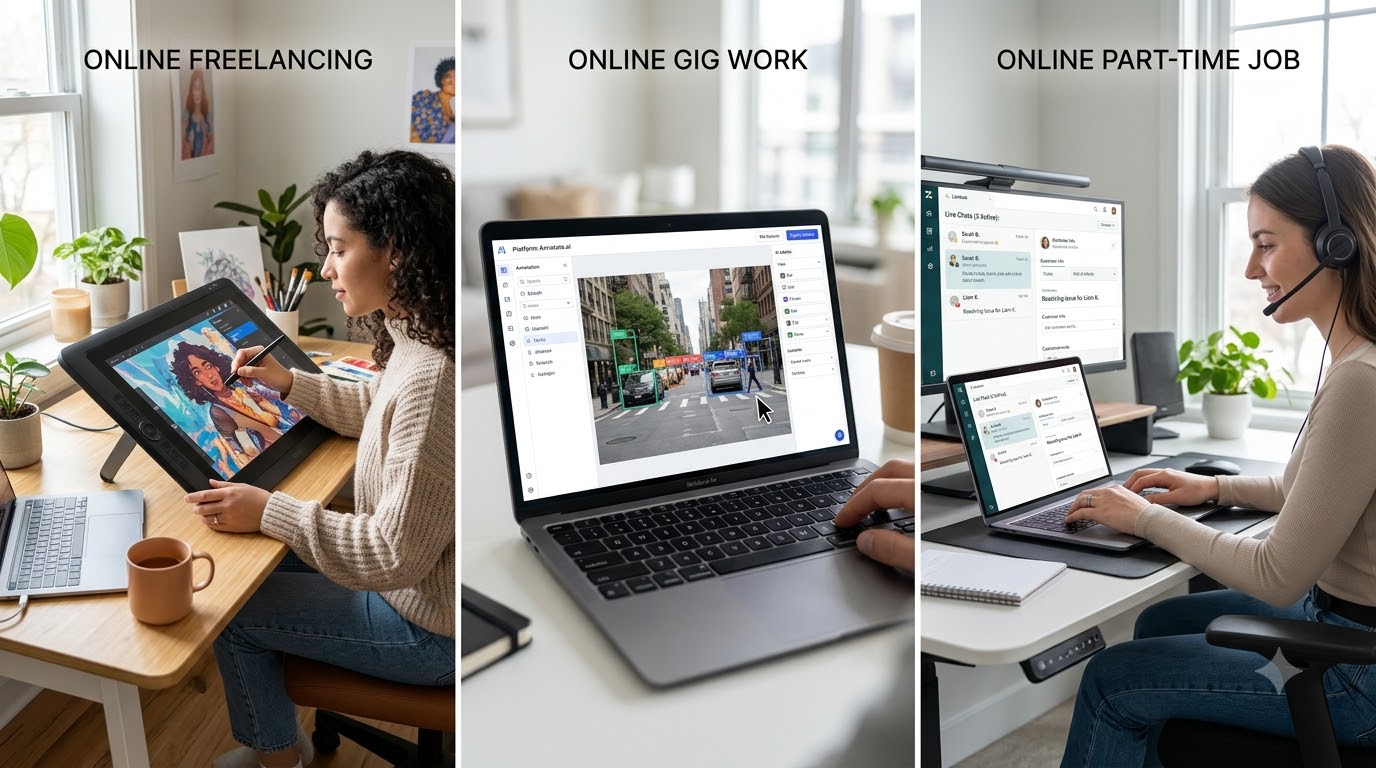
Freelancing vs Gig Work vs Part-Time Jobs: Which Type of Flexible Work Suits You?
An in-depth comparison of freelancing, gig work, and part-time jobs to help you choose the best fit for your lifestyle.

Business Outreach Jobs: How Local Brand and Merchant Acquisition Gigs Work
A deep dive into business outreach jobs and how you can earn by onboarding local merchants to digital platforms.