
Business Outreach Jobs: How Local Brand and Merchant Acquisition Gigs Work
A deep dive into business outreach jobs and how you can earn by onboarding local merchants to digital platforms.

Business Outreach Jobs: How Local Brand and Merchant Acquisition Gigs Work
Walk through almost any Indian market and you will see QR codes, delivery-platform stickers, digital catalogues, loyalty programs, billing apps, financing offers, and online business profiles.
None of these services reach local merchants automatically.
Behind many of them are field sales executives, business development executives, merchant acquisition associates, onboarding executives, and business outreach associates who visit or call local businesses, explain a service, answer questions, and help interested merchants get started.
That is what a business outreach job is about.
It can be especially useful for students, freshers, part-time workers, people returning to work, and anyone who wants practical sales experience without starting with a desk-based corporate role.
PTEarn Tip: Search PTEarn using both the job title and the skill. An opportunity may be called Business Outreach Associate, Merchant Acquisition Executive, Field Sales Executive, Business Development Executive, Merchant Onboarding Associate, or Local Sales Associate even when the work is very similar.
Why Merchant Outreach Is a Real Opportunity in India
India has an enormous base of small and local businesses.
According to the Government of India's official Udyam Registration portal, Udyam Registration plus the Udyam Assist Platform had recorded 94,766,208 registrations as of September 6, 2026. Of these, more than 94.1 million were classified as micro enterprises.[^1]
The digital-payment ecosystem is also operating at massive scale. NPCI reported that UPI processed approximately 22.72 billion transactions worth ₹28.92 lakh crore in June 2026.[^2]
These figures do not mean that every registered business needs an outreach worker or that every merchant is a sales lead. They do show why companies continue building local merchant networks: India has millions of small businesses and a huge digital commerce and payments ecosystem.
For a worker, that creates opportunities in areas such as:
- digital payments and merchant devices;
- restaurant and food-delivery onboarding;
- local marketplace seller acquisition;
- retail software and billing products;
- business listings and digital profiles;
- logistics and hyperlocal delivery platforms;
- financial products for eligible businesses;
- advertising and local promotion platforms;
- ecommerce seller onboarding;
- SaaS tools for shops, salons, clinics, gyms, restaurants, and service businesses.
What Does a Business Outreach Associate Actually Do?
The job is usually a combination of lead generation, communication, demonstration, onboarding, follow-up, and reporting.
A typical assignment may look like this:
- You receive a territory, market, category, or list of prospective merchants.
- You identify businesses that match the platform's requirements.
- You approach the owner or decision-maker.
- You explain what the product or platform does.
- You answer common questions about pricing, benefits, eligibility, payments, or setup.
- If the merchant is interested, you help complete the approved onboarding process.
- You record the visit or lead status.
- You follow up until the merchant is activated, rejected, or no longer interested.
This description closely matches real field-sales roles in India. Paytm's field-sales recruitment page, for example, lists market visits, lead generation, product deployment, explaining benefits, customer satisfaction, feedback collection, and target achievement among field-sales responsibilities.[^3]
The important lesson is that merchant acquisition is not simply handing out flyers. Good outreach associates understand the product, identify suitable prospects, communicate clearly, and track every lead.
Common Types of Business Outreach Jobs
1. Merchant Acquisition
You identify and onboard shops, restaurants, service providers, or other businesses to a platform.
Example: Helping eligible local stores register on a marketplace or business app.
2. Product Demonstration
You show merchants how a device or software product works.
Example: Demonstrating a billing application, merchant dashboard, QR solution, ordering system, or customer-management tool.
3. Lead Generation
You are paid or evaluated for finding qualified businesses that may later be converted by a sales team.
Example: Collecting verified interest from salons in a particular neighbourhood.
4. Activation Work
Registration alone may not be enough. Some campaigns define success only after the merchant completes an additional step.
Example: Profile completion, product activation, first listing, first transaction, or another clearly disclosed milestone.
5. Relationship and Retention Visits
Existing merchants may need assistance, training, product updates, or follow-ups.
These jobs can be easier for people who enjoy building relationships rather than making one-time sales.
How Payment Usually Works
Business outreach work does not have one standard compensation model.
Depending on the employer and assignment, you may see:
| Payment Model | How It Works |
|---|---|
| Fixed salary | Monthly salary for a full-time or contracted role |
| Fixed + incentive | Base salary plus bonuses for achieving targets |
| Per qualified lead | Payment for each lead meeting defined conditions |
| Per successful onboarding | Payment only after an approved merchant is onboarded |
| Per activation | Payment after the merchant completes a specified activation event |
| Milestone incentive | Bonus after reaching weekly or monthly targets |
| Travel allowance | Separate reimbursement or fixed field allowance |
For market context, AmbitionBox's 2025 data placed Business Development Executive salaries in India at roughly ₹1.8 lakh to ₹7 lakh per year, based on more than 84,000 reported salaries.[^4] This is a broad salary benchmark, not a prediction of what a PTEarn opportunity will pay.
A current Paytm field-sales recruitment page also advertises a flexible earning model and earning potential of up to ₹50,000 per month for its own field-sales program.[^3] Again, that is Paytm's stated opportunity, not a general industry guarantee and not a PTEarn earning promise.
Always check the exact PTEarn job listing. A role may be salaried, incentive-based, task-based, temporary, part-time, or contractual. Never assume a payment amount from another company's job.
How to Find Business Outreach Jobs on PTEarn
PTEarn is designed to help workers discover earning opportunities relevant to their location and work interests. Business outreach is especially location-dependent, so where you search matters almost as much as what you search.
Step 1: Complete Your PTEarn Profile
Before applying, make sure your profile contains accurate information.
Useful details may include:
- your current city;
- languages you can speak comfortably;
- education;
- previous sales, retail, customer-service, marketing, delivery, or field-work experience;
- availability;
- whether you are comfortable travelling locally;
- relevant smartphone and app skills.
Do not exaggerate your experience.
A candidate who writes "I regularly deal with customers in my family shop and can explain apps in Hindi and English" may be more useful for a local outreach role than someone who simply writes "good communication skills."
Step 2: Search Your City First
Merchant outreach jobs normally have a defined territory.
On PTEarn, check the part-time jobs page for your city and look for categories such as:
- Field Work;
- Sales;
- Business Development;
- Merchant Acquisition;
- Outreach;
- Local Marketing.
If there is no live opportunity in your city, do not apply to a distant city unless the listing explicitly allows it.
PTEarn Trick: Check nearby commercial areas as well as your city name. A vacancy may be attached to a particular city or territory even when the actual visits happen in surrounding markets.
Step 3: Look for an OPEN Vacancy
A local vacancy may change over time.
Before spending time preparing an application, check whether the opportunity is currently open and read the complete job detail page.
Pay special attention to:
- city and territory;
- working hours;
- full-time vs part-time status;
- compensation structure;
- target or success condition;
- required documents;
- travel expectations;
- merchant categories;
- reimbursement policy;
- application deadline;
- employer or campaign information.
If a listing is filled or closed, look for another live vacancy instead of repeatedly submitting applications.
Step 4: Use "Notify Me" When No Job Is Available
A zero-job page is not necessarily useless.
If PTEarn shows a Notify Me or job-interest option for your city/category, use it. This tells the platform that workers in your area are interested in that type of opportunity.
It can also save you from manually checking the same page every day.
Step 5: Apply Early — But Only After Reading the Job
For local field campaigns, companies may require a limited number of workers in each city.
That means applying early can help.
But a fast, incomplete application is not better than a correct one.
Before pressing Apply, be ready to answer:
- Why are you suitable for field outreach?
- Which local markets do you know?
- What languages do you speak?
- Are you comfortable speaking with business owners?
- Can you use Google Maps and mobile apps?
- How many hours or days can you work?
- Can you travel within the assigned area?
10 Practical Tricks to Improve Your Chances
Trick 1: Sell Your Local Knowledge
For a local business outreach job, knowing the area is an advantage.
Instead of saying:
I know Delhi.
Say something more useful:
I am familiar with retail markets around Laxmi Nagar, Nirman Vihar and Preet Vihar and can travel locally.
Specific local knowledge tells the recruiter that you may spend less time learning the territory.
Trick 2: Mention Languages Clearly
Local merchant acquisition often depends on trust.
If you can communicate in Hindi plus a regional language or English, mention it.
A shop owner may understand the product faster when it is explained in the language they normally use with customers.
Trick 3: Show Evidence of Communication Ability
You do not need a formal sales designation to have relevant experience.
Useful experience can come from:
- working in a shop;
- helping in a family business;
- customer support;
- telecalling;
- college events;
- fundraising;
- delivery or service work;
- volunteering;
- ecommerce selling;
- social-media promotion;
- explaining software to customers.
Turn the experience into a result.
Weak: "I have communication skills."
Better: "I helped customers choose products and handled questions at my family retail shop."
Trick 4: Understand the Product Before the First Visit
Never meet a merchant without knowing:
- what the platform does;
- who is eligible;
- what it costs;
- what the merchant receives;
- what documents are required;
- what happens after onboarding;
- what you are not authorised to promise.
If you cannot explain the product in 30 seconds, study it again.
Trick 5: Use a 30-Second Opening
A business owner is busy.
Do not begin with a five-minute speech.
A simple structure is:
Who you are → Why you are there → Merchant benefit → Permission to continue
For example:
"Hello, I am working on merchant outreach for [Platform]. We are helping eligible local businesses create their presence on the platform and reach customers using its services. It takes only a few minutes to understand how it works. May I explain the basic process?"
Do not claim guaranteed sales, guaranteed income, government approval, or free services unless those statements are explicitly true for the campaign.
Trick 6: Ask Questions Before Pitching
Good outreach is not just talking.
Try questions such as:
- Do you currently receive customers through online platforms?
- Do you already use a digital catalogue or business profile?
- Who normally manages online orders or enquiries?
- What is your biggest problem with the current system?
- Would you be interested if the solution fits your business?
The answer tells you whether the merchant is a good prospect.
Trick 7: Plan Your Market Route
Suppose you have 20 businesses to visit.
If they are scattered across a large city, you may spend more time travelling than selling.
Group leads by locality.
A practical field plan might be:
- 10:00–11:00: identify and map nearby prospects;
- 11:00–14:00: first round of visits;
- 14:00–15:00: lunch and update lead notes;
- 15:00–17:00: follow-ups and new visits;
- 17:00–18:00: revisit decision-makers who were unavailable.
Actual working hours will depend on the job and business category.
Restaurants, offices, salons, retailers, and clinics all have different busy periods.
Trick 8: Track Your Conversion Funnel
Do not judge yourself only by the number of merchants onboarded.
Track the steps.
For example:
| Stage | Example Count |
|---|---|
| Businesses approached | 40 |
| Decision-makers reached | 26 |
| Interested businesses | 12 |
| Applications started | 8 |
| Approved/activated | 5 |
In this example:
- decision-maker reach rate = 26 / 40 = 65%;
- interest rate among decision-makers = 12 / 26 = 46.2%;
- activation rate from businesses approached = 5 / 40 = 12.5%.
This is only an example, not an industry benchmark.
The trick is to identify where you are losing prospects.
If owners will not talk to you, improve your opening.
If they listen but do not show interest, improve qualification and benefit explanation.
If they are interested but never complete onboarding, improve follow-up.
Trick 9: Keep Simple Follow-Up Notes
After each visit, record only information permitted by the employer and applicable privacy rules.
A useful structure is:
Business | Contact Person | Date | Status | Main Objection | Next Action
Example:
ABC Salon | Owner | 7 Sep | Interested | Wants pricing details | Call 8 Sep at 11 AM
Never store passwords, PINs, OTPs, card details, or other sensitive credentials in your notes.
Trick 10: Ask for the Next Step
Do not finish a conversation with:
Okay, think about it.
Instead ask:
"Would tomorrow morning or afternoon be better for a follow-up?"
or:
"Would you like me to show you the registration steps now?"
A clear next step converts vague interest into an actionable lead.
A Simple Merchant Outreach Formula
Remember this:
**MAP → QUALIFY → EXPLAIN → VERIFY → ONBOARD → FOLLOW UP**
MAP
Choose the right area and businesses.
QUALIFY
Check whether the business fits the campaign.
EXPLAIN
Describe the product in simple language.
VERIFY
Follow the platform's approved eligibility and verification process.
ONBOARD
Assist the merchant without making false promises.
FOLLOW UP
Help complete the next approved step and update the lead status.
This is more effective than approaching every business with the same memorised pitch.
What Skills Do You Need?
You usually do not need to be an MBA or an experienced corporate salesperson.
However, successful workers tend to develop several practical skills.
Communication
Explain the product without jargon.
Instead of:
"Our SaaS solution improves omnichannel customer acquisition."
You could say:
"This tool helps you manage customer enquiries and online orders from one place."
Simple communication builds trust.
Confidence
You will hear "no."
Sometimes you will hear it many times in one day.
Confidence means being able to continue professionally without arguing or taking rejection personally.
Listening
A merchant objection can contain useful information.
"Too expensive" may really mean "I do not understand the value."
"I am busy" may mean "come at a better time."
"I already use another app" may be an opportunity to understand what the merchant likes about the competitor.
Smartphone Skills
Modern field jobs may require you to use:
- mobile apps;
- forms;
- document uploads;
- camera;
- maps;
- CRM or lead-tracking tools;
- messaging;
- digital-payment or merchant applications.
Time Management
Field work becomes expensive and exhausting when visits are poorly planned.
Good workers reduce unnecessary travel and prioritise high-potential leads.
What Should You Ask Before Accepting an Outreach Job?
Before accepting any merchant-acquisition opportunity on PTEarn or elsewhere, understand the economics of the job.
Ask these questions:
- Is the payment fixed, incentive-based, or both?
- What exactly counts as a successful onboarding?
- Is there a minimum target?
- When is payment released?
- Are rejected or duplicate merchants unpaid?
- Is travel reimbursed?
- Is there a maximum travel area?
- Are phone/data expenses reimbursed?
- Are you expected to collect documents?
- Who handles merchant support after onboarding?
- Is training provided?
- Is there any legitimate fee required from the merchant?
- What activities are prohibited?
- Who should you contact if a merchant raises a complaint?
The written job description should be your primary source of truth.
Calculate Whether the Opportunity Makes Sense
Do not focus only on the headline incentive.
Calculate your net earning after work-related expenses.
For example, assume a hypothetical campaign pays:
- ₹300 per approved activation;
- 12 approved activations in a week.
Gross earning:
₹300 × 12 = ₹3,600
Now assume your weekly field expenses are:
- transport: ₹850;
- mobile/data attributable to work: ₹150;
- other approved personal field expense: ₹100.
Estimated amount remaining before any applicable tax or other personal cost:
₹3,600 - ₹1,100 = ₹2,500
This is only an illustration.
The important habit is to calculate:
**Expected income − expected field cost = practical earning estimate**
If the employer provides a travel allowance, include that according to the actual terms.
Safety and Scam Checks
Field jobs involve strangers, documents, money-related products, and travel. Use basic safeguards.
Never Pay Just to Get a Job
Be cautious if someone asks you to pay a registration fee, security deposit, training fee, ID-card fee, or "activation fee" simply to receive a job.
A legitimate campaign may have documented employment or business processes, but unexplained upfront payment demands are a major red flag.
Never Ask a Merchant for an OTP or UPI PIN
A legitimate merchant onboarding process should never require you to learn or record the merchant's confidential UPI PIN, banking password, card PIN, or OTP.
Let the merchant enter sensitive authentication information themselves.
Do Not Promise Guaranteed Business
Never say:
- "You will definitely get 100 orders."
- "Your sales will double."
- "This is government guaranteed."
- "There is zero charge forever."
unless the exact claim is officially documented and authorised.
Verify the Company and Job Description
Before starting field work, make sure you understand:
- the company/platform name;
- your authorised role;
- official contact channel;
- the approved pitch;
- the product;
- applicable charges;
- payment conditions.
Work Safely
For field assignments:
- prefer normal business hours;
- tell someone your general work area when travelling alone;
- avoid carrying unnecessary cash;
- use public meeting areas where appropriate;
- leave if a situation feels unsafe;
- follow the employer's field-safety rules.
A 7-Day Beginner Practice Plan
You can prepare for a merchant outreach interview or assignment even before receiving your first lead.
Day 1 — Learn the Product
Practice explaining a sample digital business platform in 30 seconds.
Day 2 — Learn Your Market
Choose one nearby market and list 20 relevant businesses from public information or your own observations.
Day 3 — Practice Openings
Create three versions of your opening: retailer, salon, and restaurant.
Day 4 — Practice Objections
Answer:
- "Not interested."
- "Too expensive."
- "I already use another platform."
- "Call me later."
- "How will this help me?"
Day 5 — Practice a Demo
Explain a familiar app to a family member without using technical jargon.
Day 6 — Build a Lead Tracker
Create a simple sheet with:
Business | Contact | Status | Objection | Follow-up Date
Day 7 — Search PTEarn
Check your city, relevant job categories, vacancy status, requirements, and notification options.
How to Make Your PTEarn Application Stronger
A short application can still be specific.
Here is the type of information worth highlighting:
"I am comfortable visiting local businesses and speaking with owners. I know the main commercial areas around my locality, can communicate in Hindi and English, use Google Maps and smartphone apps confidently, and can maintain daily lead and follow-up records. I am available for local field work and willing to learn the merchant onboarding process."
Adapt the statement to your real experience.
Do not copy skills you do not have.
Can Freshers Do Merchant Acquisition Work?
Yes, some roles accept freshers, although eligibility varies by employer.
The skills are highly learnable:
- prospecting;
- pitching;
- objection handling;
- negotiation;
- CRM discipline;
- market research;
- follow-up;
- relationship management.
A recent Paytm field-sales job description published on LinkedIn described merchant identification, onboarding, app setup, support, feedback, target achievement, local-language ability, smartphone comfort, and local-market knowledge as relevant capabilities.[^5]
This is why merchant outreach can become more than a short-term gig. The experience can later support careers in:
- field sales;
- inside sales;
- business development;
- account management;
- customer success;
- channel sales;
- retail operations;
- territory management;
- growth and partnerships.
Mistakes Beginners Should Avoid
Visiting Everyone
More visits do not automatically mean more conversions.
Target businesses that actually match the campaign.
Talking Too Much
A pitch is not a speech.
Ask questions and listen.
Hiding Charges
If the product has a fee, subscription, device cost, commission, or other charge, explain it according to the official terms.
Faking an Onboarding
Never create fake merchant accounts, use someone else's documents, manipulate GPS/location data, or submit duplicate businesses just to hit a target.
Short-term target manipulation can lead to rejected payments, account suspension, merchant complaints, or worse.
Forgetting Follow-Ups
A large share of sales work happens after the first conversation.
Record the next action immediately.
Ignoring Your Expenses
A ₹500 incentive is not really ₹500 to you if you spend ₹300 travelling across the city to earn it.
Plan routes and calculate costs.
PTEarn Job-Finding Checklist
Before you apply for a Business Outreach job on PTEarn, check:
- My PTEarn profile is complete and accurate.
- My city/location is correct.
- I searched Field Work, Sales, Outreach, and Business Development roles.
- The vacancy is currently open.
- I read the complete job description.
- I understand what counts as a successful task/onboarding.
- I understand the payment structure.
- I checked travel requirements and expenses.
- I know which documents or smartphone tools are required.
- I can explain my local-market knowledge.
- I can give a 30-second introduction.
- I have not paid anyone simply to obtain the job.
- I know who to contact for official support.
- If no vacancy is live, I used the available Notify Me/job-interest option.
Frequently Asked Questions
Is business outreach the same as sales?
It is closely related, but the scope can be broader. Some outreach roles focus on lead generation, merchant education, onboarding, activation, or relationship building rather than closing a traditional sale.
Do I need a bike?
Not always. Some roles require significant travel and may prefer or require personal transport. Others involve walking within a compact market, public transport, calling, or a hybrid model. Read the individual listing.
Can I do this part-time?
Some merchant campaigns are full-time, while others may be temporary, flexible, incentive-based, or part-time. Check the PTEarn listing rather than assuming.
How much can I earn?
There is no single answer. Compensation can depend on the city, employer, product, working hours, employment type, targets, incentive rules, and your conversion rate.
Treat salary websites and other companies' recruitment advertisements as market context—not as a promise of what your PTEarn job will pay.
What is the most important skill?
For beginners, it is the ability to speak clearly, listen carefully, and follow up reliably.
A confident person who listens to merchants and maintains accurate follow-up records can often learn the rest.
What if PTEarn has no Business Outreach vacancy in my city?
Check related categories and nearby relevant city pages. If PTEarn provides a Notify Me or interest-registration option, use it so you can express interest without applying for a job that does not exist.
Final Takeaway
Business outreach is one of the clearest examples of how India's digital economy still depends on real human interaction.
Apps can automate registration.
Dashboards can track leads.
Algorithms can identify markets.
But someone still has to meet the shop owner, explain the value, answer a real question, resolve hesitation, and build trust.
If you are comfortable communicating with people and learning how local businesses operate, merchant acquisition can give you practical experience in sales, marketing, customer relationships, and business development.
Start with three habits:
- Search locally on PTEarn.
- Understand the payment and success conditions before applying.
- Track every conversation and follow-up professionally.
The goal is not to approach the maximum number of merchants.
The goal is to find the right businesses, explain the right solution, and complete the right onboarding process honestly.
Sources and Data Notes
[^1]: Udyam Registration, Ministry of Micro, Small & Medium Enterprises, Government of India — MSME Factsheet Dashboard. Dashboard data dated September 6, 2026 showed 94,766,208 Udyam + UAP registrations, including 94,134,625 micro classifications.
Source: https://udyamregistration.gov.in/
[^2]: National Payments Corporation of India (NPCI) — UPI Product Statistics. June 2026: 22,716.07 million transactions with a value of ₹28,92,138.67 crore.
Source: https://www.npci.org.in/product/upi/product-statistics
[^3]: Paytm — Field Sales Jobs / Business Development Jobs. The recruitment page describes market visits, lead generation, sales targets, deployment, merchant support, feedback collection and its own compensation/earning model.
Source: https://paytm.com/fse/
[^4]: AmbitionBox — Business Development Executive Salary in India (2025). Reported range: approximately ₹1.8 lakh to ₹7 lakh annually, based on 84,000+ reported salaries at the time of publication. Salary databases are indicative and should not be treated as guaranteed compensation.
Source: https://www.ambitionbox.com/profile/business-development-executive-salary/edtech-industry
[^5]: Paytm field-sales listing surfaced via LinkedIn (2026). Described responsibilities including merchant identification, onboarding, app installation/setup, merchant support, local-market knowledge, communication, smartphone use and target achievement. Job listings can expire or change.
PTEarn publishes educational content to help users understand work opportunities. Availability, eligibility, working conditions and earnings vary by job, employer, city and campaign. Always read the individual job listing and official terms before applying.
Looking for flexible earning opportunities?
Explore part-time jobs and microtasks available on PTEarn.
Keep Reading

Field Gig Jobs in India: Flexible Work Beyond an Office or Laptop
Learn about the growing market for field gig jobs, including local business verification, audits, and mystery shopping.
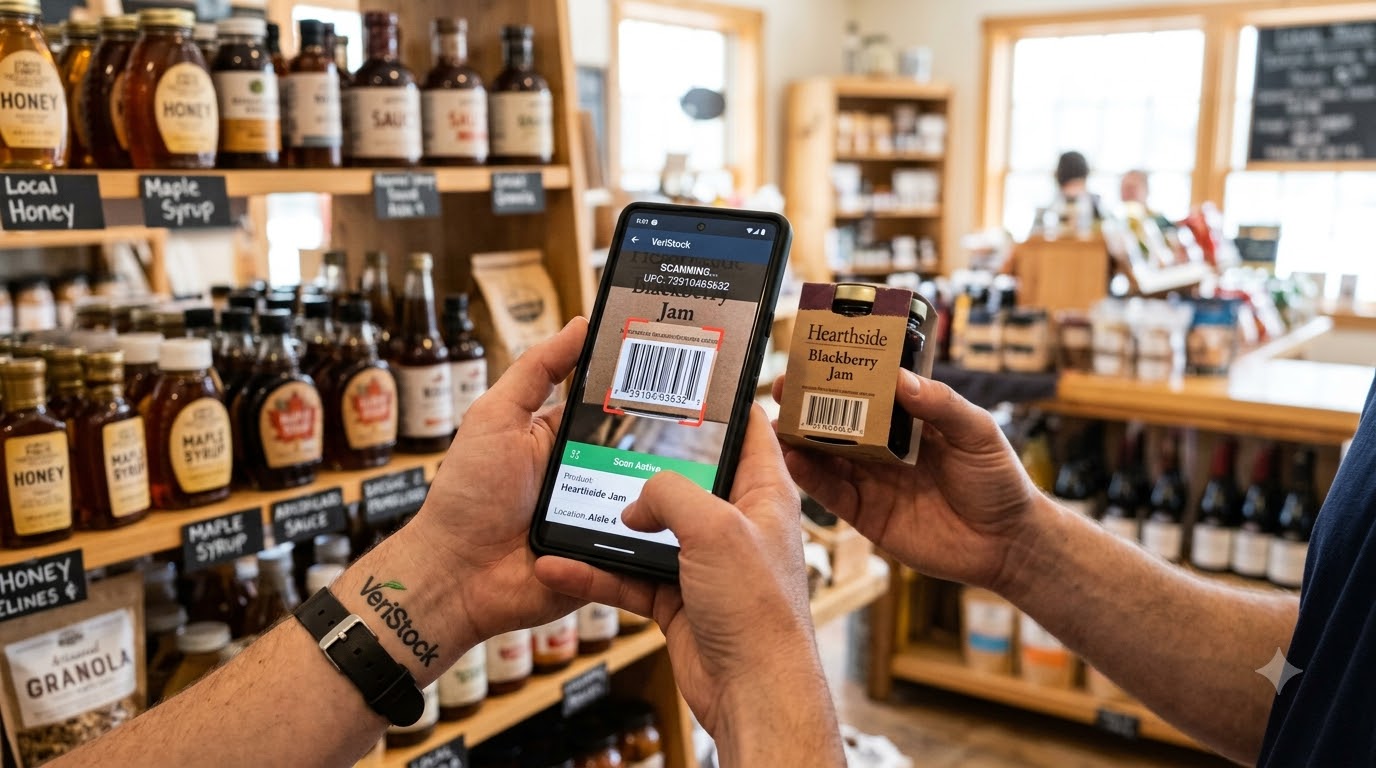
Local Business Verification Jobs: A New Kind of Flexible Gig Work
Earn money by completing local business verification tasks such as checking store locations, opening hours, photos, menus, and product availability.
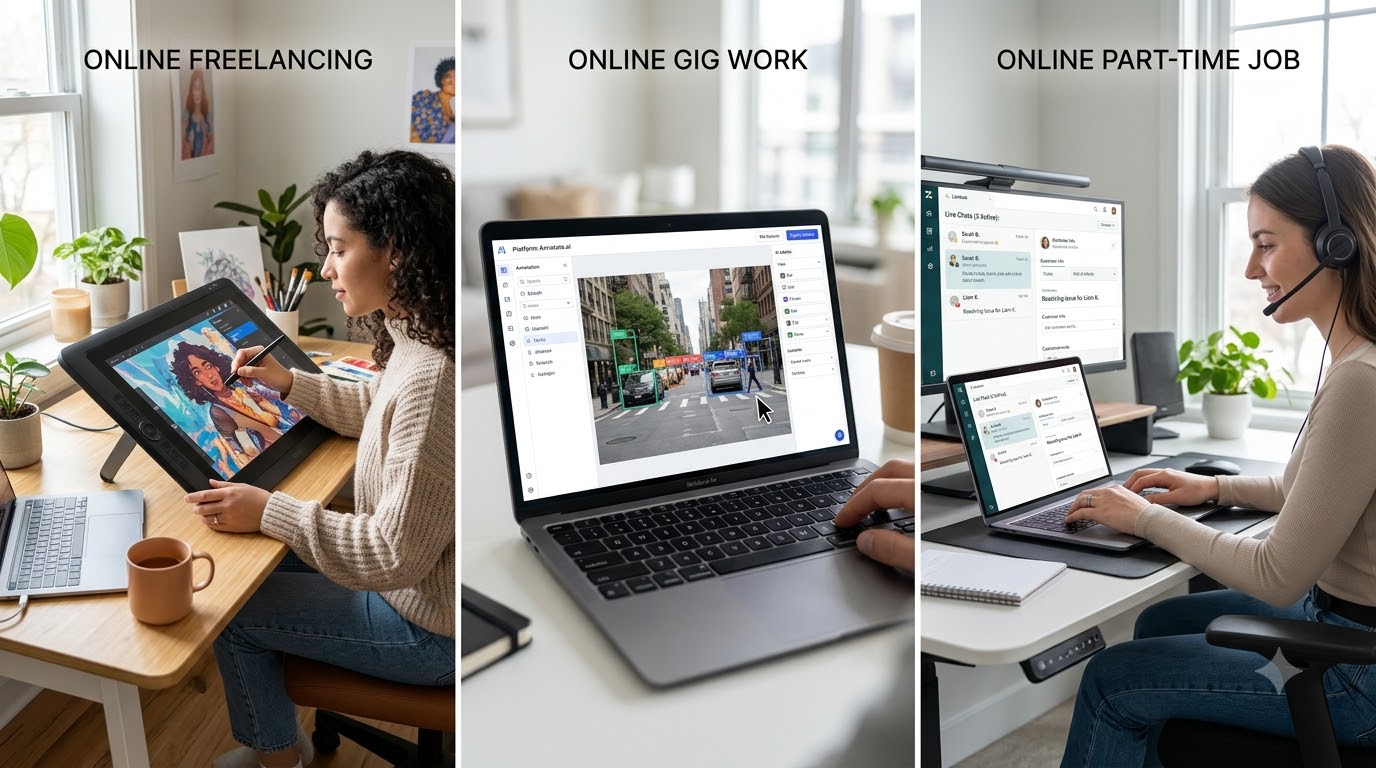
Freelancing vs Gig Work vs Part-Time Jobs: Which Type of Flexible Work Suits You?
An in-depth comparison of freelancing, gig work, and part-time jobs to help you choose the best fit for your lifestyle.