
UGC Creator Jobs in India: Earn by Creating Content Without Being an Influencer
Find out how to become a User-Generated Content (UGC) creator and get paid by brands to make short authentic videos.
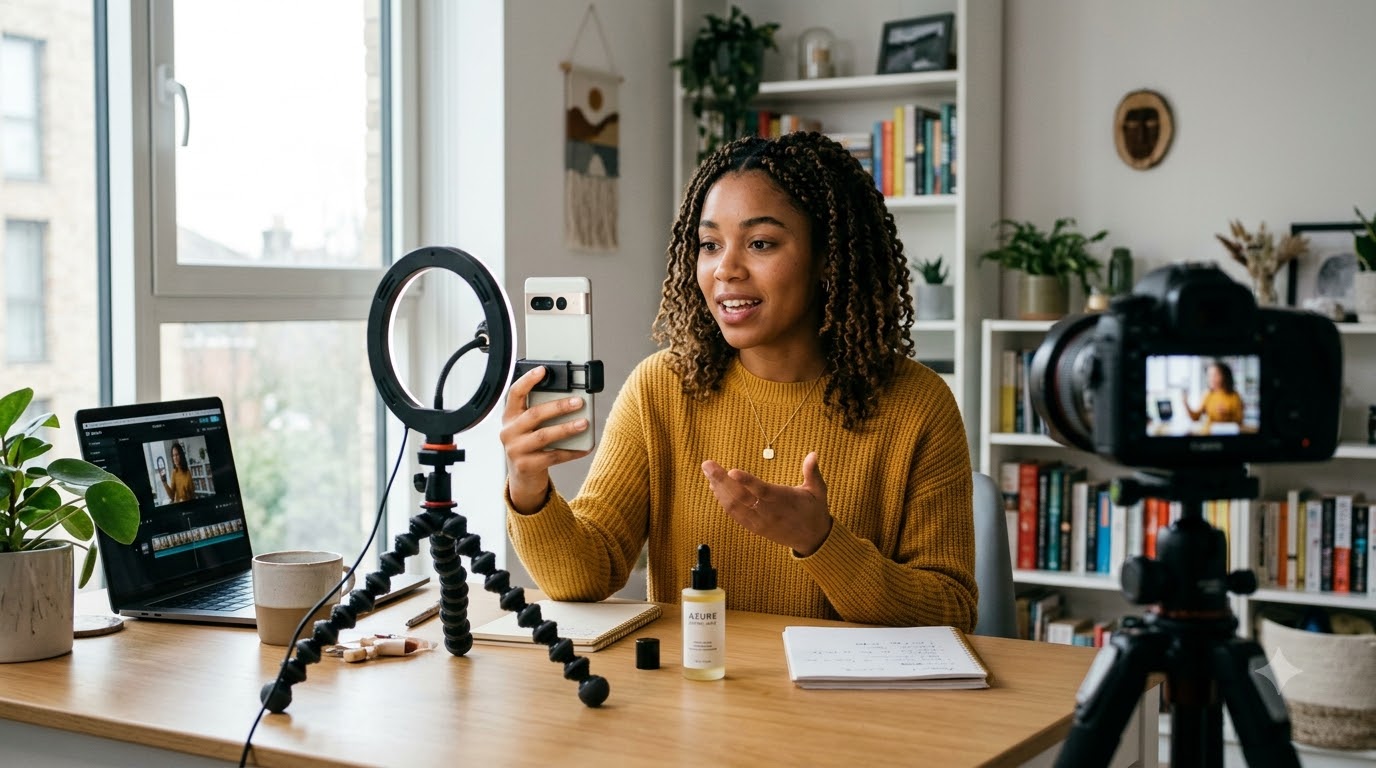
UGC Creator Jobs in India: Earn by Creating Content Without Being an Influencer
You do not need 100,000 Instagram followers to earn from content creation.
One of the fastest-growing opportunities in the creator economy is User-Generated Content (UGC): short videos, product demonstrations, testimonials, unboxings, photos, voiceovers, and lifestyle clips that brands can publish on their own social media pages, websites, marketplaces, and advertisements.
The important difference is simple:
An influencer is usually paid partly for access to an audience. A UGC creator is primarily paid for creating the content itself.
That means someone with 300 followers—or even no public creator account—can potentially get UGC work if they can make useful, natural-looking content that matches a brand's brief.
For students, working professionals, homemakers, freelancers, aspiring actors, regional-language speakers, and anyone comfortable using a smartphone camera, UGC can be a practical side-income skill to explore.
However, it is not "easy money." Brands are paying for a business asset, so successful UGC creators learn scripting, lighting, speaking, editing, communication, revisions, usage rights, and client management.
This guide explains how the UGC market works in India, how much beginners may charge, how to build a portfolio without clients, how to find opportunities, how to pitch brands, how to avoid scams, and how to turn one-off projects into repeat work.
What Is UGC?
UGC stands for User-Generated Content.
Traditionally, the term referred to content voluntarily posted by ordinary customers—for example:
- a customer reviewing a face wash on Instagram;
- a traveller posting a hotel video;
- someone uploading an unboxing to YouTube;
- a shopper posting a product photo;
- a user explaining how an app works.
In modern digital marketing, brands also commission creators to produce UGC-style content.
The brand may send you a product, provide a creative brief, and pay you to create a video that looks natural rather than like a traditional television commercial.
The content may then appear on:
- Instagram Reels;
- Facebook and Instagram advertisements;
- YouTube Shorts;
- a brand's website;
- Amazon or other e-commerce product pages;
- app-install campaigns;
- landing pages;
- email campaigns;
- marketplace listings;
- performance-marketing ads.
The creator may never have to post the video on their own account.
UGC Creator vs Influencer: What Is the Difference?
| Factor | UGC Creator | Influencer |
|---|---|---|
| Main value | Content creation | Content + audience reach |
| Large follower count required? | Usually no | Often important |
| Must post on own account? | Not necessarily | Usually yes |
| Payment depends on | Quality, deliverables, rights, complexity | Reach, engagement, niche, content |
| Brand can run content as an ad? | Often, if usage rights are agreed | Depends on contract |
| Beginner-friendly? | Yes, if you can create good content | Harder without an audience |
| Portfolio important? | Extremely important | Audience metrics also matter |
This distinction is what makes UGC interesting for beginners.
You are not waiting for thousands of people to follow you before you can start approaching brands.
You are building a creative service business.
Why Are Brands Paying for UGC?
India's advertising market is increasingly digital and video-led.
The ET Brand Equity–Ipsos State of Digital Advertising in India 2025–26 report estimated that digital advertising reached approximately ₹49,000 crore in FY2024–25, accounting for about 44% of total advertising spending in India.[^1]
Short-form video is particularly important for product discovery. A Meta-commissioned Ipsos study published in 2025 reported that 80% of Indians surveyed discovered new brands on Meta platforms, and found strong preference and engagement for Reels among the people surveyed.[^2]
The wider creator economy is also substantial. BCG estimated in 2025 that India had approximately 2–2.5 million monetized content creators, influencing roughly $350–400 billion in consumer spending. BCG projected creator-influenced consumption could exceed $1 trillion by 2030.[^3]
Meanwhile, Kofluence's 2026 industry research placed India's influencer-marketing sector at roughly ₹3,000–3,500 crore in 2025 and projected it could reach ₹4,500–5,000 crore by 2027.[^4]
These figures do not mean every UGC creator will earn high income. They show why brands, agencies, marketplaces, and performance-marketing teams increasingly need a continuous supply of social-first creative.
Why UGC-style creative is attractive to brands
Brands often need many creative variations because:
- audiences get tired of seeing the same advertisement;
- different hooks appeal to different customer segments;
- social platforms reward native-looking vertical content;
- brands want real people demonstrating products;
- marketers need multiple creatives for A/B testing;
- local and regional-language campaigns need different faces and voices;
- producing every 15–30 second video through a traditional film crew can be expensive and slow.
UGC is therefore less about creating one "perfect viral video" and more about producing useful creative assets consistently.
What Does a UGC Creator Actually Do?
A UGC assignment might look like this:
"Create a 30-second vertical video showing how you use our sunscreen. Start with a problem-focused hook, demonstrate the texture, mention that it feels lightweight, and end with a call to action. Submit one edited video plus three raw hook variations."
Your work may involve:
- reading the brand brief;
- researching the product;
- writing or refining a script;
- setting up lighting and background;
- recording several takes;
- filming product close-ups and B-roll;
- editing;
- adding captions;
- exporting in the requested resolution;
- sending a draft;
- completing agreed revisions;
- delivering final files.
It is closer to freelance content production than casual social posting.
Common Types of UGC Jobs
1. Product Demonstration
You show how the product works.
Examples:
- applying skincare;
- using a kitchen tool;
- demonstrating an app;
- trying a clothing product;
- assembling a small product;
- using a fitness accessory.
Tip: Show the product in action quickly. Do not spend half the video introducing yourself.
2. Testimonial-Style Video
You speak naturally about your experience with the product.
A simple structure:
Problem → Discovery → Experience → Result → Call to action
Example:
"I kept forgetting to track my expenses, so I tried this app..."
Only make claims you can truthfully support. Never invent medical, financial, performance, or personal results because a brand asks you to.
3. Unboxing Video
You capture:
- packaging;
- opening experience;
- product reveal;
- first reaction;
- close-up shots;
- accessories or included items.
Unboxing is particularly useful for beauty, fashion, gadgets, food, home products, and D2C brands.
4. Problem-Solution Video
These are common in performance advertising.
Example structure:
Hook: "If your desk is always full of charging cables, try this."
Problem: Show the messy desk.
Solution: Demonstrate the organizer.
Proof: Show before and after.
CTA: "Check the product details if you want a cleaner setup."
5. Voiceover UGC
You do not necessarily need to speak on camera.
You record visual clips and add a voiceover later.
This can be ideal for creators who are initially uncomfortable speaking directly into the camera.
6. B-Roll Packs
Brands may pay you only for raw visual clips.
For example:
- holding the product;
- opening the box;
- using it at a desk;
- walking while carrying it;
- close-up texture shots;
- lifestyle clips;
- reaction shots.
An editor or agency can combine those clips into multiple ads.
7. UGC Photography
Not every project is video.
You might produce:
- product-in-hand photos;
- mirror photos;
- lifestyle photos;
- desk setups;
- flat lays;
- before/after setups;
- product-use images.
8. App or Website UGC
You can create content even without receiving a physical product.
Examples:
- screen-recording an app;
- explaining a feature;
- showing account setup;
- demonstrating a booking flow;
- narrating a software use case.
This can be a good niche for students and professionals who are already comfortable with technology.
Do You Need Expensive Equipment?
No.
For beginner UGC, a modern smartphone is usually enough.
Brands often want content that feels native to Instagram or short-form video rather than a highly polished commercial.
Basic starter setup
You can begin with:
- smartphone;
- natural window light;
- clean background;
- phone stand or inexpensive tripod;
- earphones or basic microphone if audio is poor;
- free or low-cost editing app;
- clean lens;
- quiet room.
What matters more than an expensive camera
A ₹1 lakh camera will not rescue a weak video.
Prioritize:
- good lighting;
- clear audio;
- strong opening hook;
- steady framing;
- clean background;
- natural delivery;
- clear product visibility;
- tight editing.
The ₹0 Portfolio Method: Start Before You Have a Client
One of the biggest beginner mistakes is saying:
"I cannot build a portfolio because no brand has hired me."
You do not need a paid client to demonstrate your ability.
Choose products you already own.
Examples:
- face wash;
- headphones;
- water bottle;
- laptop stand;
- shoes;
- coffee;
- food-delivery app;
- productivity app;
- T-shirt;
- backpack;
- kitchen product.
Create speculative/sample UGC clearly presented as portfolio work, not as a paid endorsement from the brand.
Build these six sample videos
A strong beginner portfolio can contain:
- one talking-head testimonial;
- one product demonstration;
- one unboxing;
- one voiceover video;
- one problem-solution advertisement;
- one aesthetic B-roll video.
That is enough to demonstrate range.
The smart trick
Do not make six videos about six completely unrelated industries.
Choose two niches and make three videos for each.
For example:
Beauty
- sunscreen demo;
- face-wash testimonial;
- skincare B-roll.
Technology
- mobile app demo;
- headphones unboxing;
- laptop accessory problem-solution video.
A focused portfolio makes it easier for a brand to imagine hiring you.
How to Create a UGC Video That Brands Can Actually Use
A beautiful video is not automatically a useful ad.
The content must communicate something.
Use the H-B-C structure
H — Hook
Capture attention in the opening seconds.
Examples:
- "I wish I had bought this before my last trip."
- "This fixed the most annoying part of my morning routine."
- "Three things I noticed after using this."
- "I almost returned this, but then..."
- "If you work from a laptop all day, watch this."
- "I tested this so you don't have to."
Avoid copying exaggerated viral hooks blindly. Match the hook to the product.
B — Body
Show:
- problem;
- demonstration;
- benefit;
- proof;
- important details.
Keep cuts tight.
C — Call to Action
A CTA can be gentle:
- "You can check the details on the brand's website."
- "Take a look if this solves the same problem for you."
- "The link has the full product details."
- "Check the offer while it is available."
Shoot More Than the Brand Asked For
This is one of the best ways to become valuable.
If a brand asks for one video, capture extra raw footage while the setup is ready.
For example:
- three opening hooks;
- product close-up;
- smiling reaction;
- serious reaction;
- side angle;
- hand shot;
- packaging;
- using the product;
- pointing gesture;
- blank reaction shot.
Why?
Because one filming session can produce many advertising variations.
You can also charge separately for extra hooks or raw footage if they were not part of the original agreement.
A Simple 30-Second UGC Script Template
0–3 sec: Hook
"Nobody told me this was the easiest way to..."

3–8 sec: Problem
"I used to struggle with..."

8–20 sec: Product demonstration
"So I tried [product]. The first thing I noticed was..."

20–26 sec: Benefit
"What I like is..."

26–30 sec: CTA
"If you have the same problem, check the product details."
Do not memorize every line word-for-word if it makes you sound robotic.
Read the idea, understand it, and speak naturally.
How Much Can UGC Creators Charge in India?
There is no official UGC salary or standard rate card in India.
Pricing varies based on:
- experience;
- content quality;
- niche;
- location;
- language;
- video length;
- scripting;
- editing;
- number of concepts;
- number of hooks;
- raw footage;
- turnaround time;
- revisions;
- exclusivity;
- paid-ad usage;
- creator posting;
- agency involvement.
Published 2025–26 pricing guides from Indian UGC agencies and marketplaces show a very wide market. Beginner or nano-level UGC work is often quoted in the low-thousands of rupees per video, while experienced UGC-first creators may charge considerably more.[^5][^6]
A sensible beginner should treat these figures as negotiation benchmarks, not promised earnings.
Illustrative beginner rate framework
| Deliverable | Possible beginner quote* |
|---|---|
| 15–30 sec simple video | ₹1,500–₹3,500 |
| 30–60 sec edited UGC video | ₹2,000–₹5,000 |
| Product demo with scripting | ₹2,500–₹6,000 |
| Raw B-roll pack | ₹1,500–₹4,000 |
| 5–10 UGC photos | ₹1,000–₹3,500 |
| Extra hook variation | ₹300–₹1,000+ |
| Fast turnaround | Add a rush fee |
| Paid advertising rights | Quote separately |
*Illustrative ranges based on publicly available market guides, not guaranteed market rates. Some clients will offer less; experienced specialists may charge substantially more.
Do Not Make This Pricing Mistake
Suppose a brand says:
"We will pay ₹3,000 for one video."
Before accepting, ask:
What exactly does ₹3,000 include?
There is a big difference between:
Package A
- one 30-second edited video;
- one concept;
- one revision;
- organic social usage for three months.
and:
Package B
- one edited video;
- all raw footage;
- unlimited revisions;
- perpetual advertising usage;
- exclusivity;
- permission to modify your face/voice with AI;
- permission to run ads indefinitely.
The second deal is far more valuable to the brand.
Do not sell everything for the same base price.
Understand Usage Rights Before You Quote
This is one of the most important professional skills in UGC.
Content creation fee
This is what the brand pays you to make the asset.
Organic usage
The brand can post the content on its own social accounts.
Paid usage / advertising rights
The brand can use your face, voice, or footage in paid advertisements.
That can give the content much wider exposure.
Ask:
- Which platforms?
- For how many months?
- India only or worldwide?
- Can the brand edit the content?
- Can it combine your video with other footage?
- Can it use your name?
- Can it use your likeness?
- Can it generate AI variations?
- Can it run the content after the contract ends?
Exclusivity
A skincare brand may ask you not to work with competing skincare brands for three months.
That restriction has economic value because it may prevent you from taking other jobs.
Price it separately.
Raw footage
Raw footage gives the brand more flexibility to create additional ads.
Do not assume it is automatically included.
A Better Beginner Rate Card
Instead of sending:
"My rate is ₹2,500."
Send something structured:
UGC Starter Package — ₹2,500

Includes:
- 1 × 30–45 sec vertical UGC video
- 1 concept
- basic script adaptation
- editing + captions
- 1 revision
- 7-day organic brand usage

Optional add-ons:
- extra hook
- raw footage
- additional revision
- paid-ad usage
- extended usage period
- rush delivery
- exclusivity
This immediately makes you look more professional.
How to Find UGC Creator Jobs in India
UGC opportunities rarely use only the job title "UGC Creator."
Search multiple phrases.
Keywords to search
- UGC creator
- content creator
- short-form video creator
- Instagram Reel creator
- product video creator
- freelance content creator
- social media content creator
- video content freelancer
- D2C content creator
- product reviewer
- creator campaign
- brand collaboration
- paid content creator
- performance creative creator
- UGC actor
- UGC video creator
- creator for ads
- regional-language creator
On PTEarn
When opportunities are available, check relevant listings under categories such as Creator Economy, digital marketing, social media, freelance work, or content creation.
Do not search only for "UGC." A small business may post:
"Need someone to create three Instagram videos for our cafe."
That is effectively a UGC opportunity even if the employer never uses the term.
The Local Business Strategy Most Beginners Ignore
Your first client does not need to be a famous D2C startup.
Open Instagram or Google Maps and list businesses near you:
- cafes;
- salons;
- gyms;
- clothing stores;
- jewellery brands;
- bakeries;
- clinics where appropriate advertising rules permit;
- home decor shops;
- local food brands;
- coaching businesses;
- photographers;
- restaurants;
- pet stores;
- travel businesses.
Look for a business with:
- a decent product;
- weak Reels;
- inconsistent posting;
- poor video demonstrations;
- good photos but little video;
- active advertisements;
- an e-commerce website.
Then create one short sample concept.
Do not pretend the business hired you.
Send the idea privately:
"I noticed you have strong product photos but fewer customer-style videos. I create short vertical UGC that brands can use on Reels and ads. I drafted three video concepts specifically for your product. May I send them?"
A personalized pitch will usually outperform:
"Hi sir collaboration available?"
How to Find Brands That Are Already Spending Money
Here is a useful trick:
Look for businesses that are already advertising.
Why?
A company already paying for ads understands that creative has commercial value.
A business that has never spent ₹1 on marketing may be harder to convince.
Look for:
- sponsored Instagram posts;
- repeated video ads;
- D2C product brands;
- recently launched products;
- festive campaigns;
- brands hiring social media managers;
- brands frequently working with creators.
Then pitch UGC as a way to create more ad variations.
How to Pitch a Brand
A pitch should answer four questions:
- Who are you?
- Why are you contacting this brand?
- What can you make?
- What should happen next?
DM template
Hi [Brand Name],

I’m a UGC creator focused on short product videos for social media and ads.

I came across your [specific product] and liked [specific observation].

I already have a few content ideas for it—for example:
1. [hook / concept]
2. [hook / concept]
3. [hook / concept]

I can create natural 9:16 product demos, testimonials and B-roll that your team can publish on your own channels.

Portfolio: [link]

If you’re currently testing creator-style content, I’d be happy to send a simple package and rate card.

Thanks,
[Name]
Email subject ideas
UGC ideas for [Brand Name]
3 short-form video concepts for [Product]
UGC creator for [Brand Name] ads
Short-form product content for [Brand Name]
Personalization Trick: Pitch the Product, Not Yourself
Weak pitch:
"I am passionate, hardworking and love creating content."
Stronger pitch:
"Your travel bottle has a leak-proof cap that is difficult to explain in a static image. I would create a 20-second bag-test video showing the bottle upside down next to a laptop, followed by a close-up of the locking mechanism."
The second pitch proves that you understand marketing.
Create a Simple UGC Portfolio
You do not need a complicated website.
Your portfolio should show:
1. One-line positioning
"UGC creator producing natural product demos and short-form ad creative in Hindi and English."
2. Your niches
For example:
- fashion;
- skincare;
- technology;
- food;
- apps;
- fitness;
- home;
- lifestyle.
3. Sample videos
Embed or link your best 5–8 pieces.
4. Services
- product demos;
- testimonials;
- voiceovers;
- B-roll;
- photography;
- scriptwriting;
- hook variations.
5. Languages
Regional-language ability can be commercially valuable.
Mention languages you can genuinely speak naturally on camera.
6. Contact method
Give the brand one obvious way to reach you.
Regional-Language UGC Can Be an Advantage
India is not a single-language advertising market.
Brands may need content in:
- Hindi;
- Marathi;
- Bengali;
- Tamil;
- Telugu;
- Kannada;
- Malayalam;
- Gujarati;
- Punjabi;
- and other regional languages.
Industry research has increasingly highlighted the importance of regional and hyperlocal creators in India's creator economy.[^7]
If you naturally speak a regional language, do not hide it.
A creator who can produce:
- English version;
- Hindi version;
- regional-language version;
of the same concept may become more valuable to a performance-marketing team.
You Do Not Have to Show Your Face
UGC does not always require talking-head content.
Faceless possibilities include:
- hands-only product demonstration;
- screen recordings;
- cooking;
- desk setup;
- product close-ups;
- voiceover;
- stop-motion;
- aesthetic B-roll;
- app tutorials;
- packing/unpacking;
- point-of-view videos.
If you are camera-shy, start with faceless content and gradually add voice or face when comfortable.
The 10-Shot Rule
Whenever you receive a product, capture at least these ten shots before you start editing:
- unopened package;
- opening package;
- product in hand;
- close-up;
- side angle;
- using the product;
- reaction;
- product in real environment;
- detail or feature shot;
- clean hero shot.
This gives you enough material to edit several versions.
The Three-Hook Trick
Instead of filming one opening line, record three.
Example product: water bottle.
Hook 1:
"Your bottle should not be the reason your laptop gets destroyed."
Hook 2:
"I carried this upside down in my backpack for a week."
Hook 3:
"If you commute every day, check the cap before buying a bottle."
The body of the video can remain similar.
For advertisers, multiple hooks create additional testable creative.
Learn to Read a Creative Brief
A professional brief may contain:
- objective;
- target audience;
- problem;
- product benefit;
- mandatory talking points;
- words you cannot use;
- visual requirements;
- call to action;
- video length;
- format;
- deadline;
- references;
- usage rights.
Before shooting, convert the brief into a checklist.
Example:
[ ] Product visible in first 3 seconds
[ ] 9:16 vertical
[ ] Mention Feature A
[ ] Do not make medical claim
[ ] Show packaging
[ ] CTA included
[ ] Under 30 seconds
[ ] Captions included
That one habit can reduce revision requests dramatically.
Editing Tips for Better UGC
You do not need Hollywood editing.
You need clarity.
Keep cuts fast
Remove:
- long pauses;
- repeated words;
- empty seconds;
- unnecessary introductions.
Use readable captions
Many users watch videos without full audio attention.
Keep captions:
- large enough;
- high contrast;
- away from UI buttons;
- synchronized with speech.
Do not overuse transitions
Simple cuts often look more native than ten flashy effects.
Show the product
A surprisingly common beginner mistake is creating a beautiful video in which the product is barely visible.
Delivery Trick: Send Organized Files
Do not send:
VID_92837_FINAL_FINAL2_NEW.mp4
Use:
brand-product-concept01-v1.mp4
brand-product-hook01.mp4
brand-product-hook02.mp4
brand-product-broll01.mp4
Create folders:
/Final
/Raw-Footage
/Hooks
/Photos
Professional delivery increases the chance of repeat work.
Define Revisions Before You Start
Unlimited revisions are dangerous.
A simple contract or written confirmation can state:
"Price includes one revision based on the original brief. A new concept, reshoot, script change after approval, or additional deliverable may be quoted separately."
This protects both sides.
If you missed the agreed brief, fix it.
If the brand changes its mind after approving the concept, that is different.
Never Start Significant Work Without Written Scope
At minimum, confirm:
- deliverables;
- video duration;
- format;
- deadline;
- payment;
- revisions;
- product shipping;
- usage rights;
- paid advertising;
- raw footage;
- exclusivity;
- whether you must post;
- payment date;
- who owns the final files.
For larger projects, use a proper agreement.
Payment Safety for UGC Creators
A brand logo in an Instagram profile does not automatically make an offer legitimate.
Red flags
Be cautious if someone:
- asks you to pay a registration fee;
- asks for a "security deposit";
- asks you to purchase an expensive starter kit to unlock jobs;
- requests OTPs;
- asks for card PINs;
- asks for remote access to your phone;
- sends suspicious APK files;
- promises unrealistic guaranteed earnings;
- pressures you to act immediately;
- refuses to provide company details;
- requests excessive identity documents before any legitimate onboarding need;
- asks you to return part of a payment to another account;
- sends a fake payment screenshot;
- asks you to pay customs/courier charges through an unknown link.
Important rule
A genuine client may require a product purchase in some reimbursement-based campaigns, but you should never assume reimbursement is safe merely because it is promised. Verify the business, written terms, refund conditions, and payment process first.
For beginners, campaigns where the brand ships the product directly are easier to evaluate.
Paid or Barter? Know the Difference
Gifted / barter collaboration
You receive a product in exchange for content.
This can be useful for building a portfolio, but it is not the same as cash income.
Ask yourself:
- Do I actually want this product?
- What is the real retail value?
- How much work is required?
- Is the brand requesting advertising rights?
- Do I have to post it?
- Is exclusivity included?
Giving a ₹500 product in exchange for a fully scripted advertisement, raw footage, posting, and perpetual ad rights may not be a fair trade.
Advertising Disclosure Rules in India
Creators should understand disclosure requirements.
The Advertising Standards Council of India (ASCI) states that influencer advertising involving a material connection with an advertiser should carry a clear disclosure.[^8]
India's Department of Consumer Affairs has also issued endorsement guidance stating that disclosures for paid or barter endorsements should be clear and prominent, and terms such as "advertisement," "ad," "sponsored," "collaboration," or "paid promotion" may be used as appropriate.[^9]
The government guidance also says endorsers should not promote products or services they have not actually used or experienced, or for which appropriate due diligence has not been done.[^9]
Important distinction
If you only produce a video privately and the brand publishes it, the exact disclosure implementation may depend on how and where the brand uses the content.
If you publish sponsored content on your own social account, treat disclosure as a serious requirement.
Do not hide #ad among dozens of hashtags.
Never Make Claims You Cannot Verify
A brand may send a script saying:
"This product cures acne in seven days."
Do not automatically say it.
Certain categories—especially health, financial services, food, supplements, cosmetics, education, and investments—can involve additional advertising or regulatory requirements.
Ask the brand for approved claims.
A useful creator response is:
"Please confirm which product claims are approved for advertising. I will keep the script within those claims."
Professional creators protect their own credibility.
UGC Is a Business Skill, Not Just a Camera Skill
The creator who earns consistently is often not the person with the fanciest videos.
It is the person who:
- responds on time;
- understands the brief;
- delivers correct files;
- meets deadlines;
- communicates clearly;
- needs fewer revisions;
- invoices properly;
- understands usage rights;
- keeps records;
- follows up;
- is easy to work with.
Reliability is a competitive advantage.
Track Every Pitch
Create a simple spreadsheet.
| Brand | Contact | Date Pitched | Niche | Status | Follow-Up | Quote | Result |
|---|---|---|---|---|---|---|---|
| Example Brand | 07 Sep | Beauty | Sent | 11 Sep | ₹3,000 | — |
After 50 pitches, you will have real data.
You can calculate:
Reply Rate
Replies ÷ Pitches × 100
Conversion Rate
Paid Clients ÷ Pitches × 100
Average Project Value
Total Revenue ÷ Number of Paid Projects
This is much more useful than thinking:
"Nobody wants to hire me."
Maybe you sent only seven generic DMs.
A 30-Day UGC Beginner Plan
Days 1–3: Choose your niches
Pick two:
- fashion;
- beauty;
- food;
- tech;
- apps;
- fitness;
- home;
- travel;
- finance only if you understand applicable compliance;
- education;
- lifestyle.
Days 4–10: Create six sample videos
Make:
- two talking-head;
- one demo;
- one voiceover;
- one B-roll;
- one problem-solution.
Days 11–12: Build your portfolio
Use a simple website, portfolio page, or organized cloud folder.
Days 13–14: Build a rate card
Define:
- base video;
- extra hook;
- raw footage;
- paid usage;
- revision;
- rush delivery.
Days 15–20: Build a lead list
Find 50 relevant brands.
Do not pitch yet if you have no personalization notes.
Days 21–27: Send personalized outreach
Aim for a manageable number every day.
Quality beats sending 200 spam messages.
Days 28–30: Follow up
Send one polite follow-up to brands that did not reply.
Then review:
- which niche replied most;
- which samples got compliments;
- which price caused objections;
- where leads came from.
Improve the next month.
How to Turn One UGC Job Into Five
The best income improvement often comes from repeat clients, not constantly hunting for new brands.
After successful delivery, say:
Thanks — glad the video worked for your team.

If you are testing more creative next month, I can also produce:
- 3 new hooks for this concept
- a testimonial variation
- a product-demo variation
- a regional-language version
- a B-roll pack for your editor

Happy to send a bundled quote.
This changes your positioning from:
"person who made one Reel"
to:
"creator who can supply a creative pipeline."
Bundle Your Services
Once you have experience, you can offer packages.
Example: Starter
- 1 UGC video
- 1 hook
- basic editing
Example: Testing Pack
- 3 UGC videos
- 3 different concepts
- 2 hooks per concept
Example: Content Library
- 3 edited videos
- 15 raw B-roll clips
- 10 UGC photos
- 3 hook-only clips
Bundles can increase your average project value while giving brands more assets to test.
Track Which Content Performs
If a client is willing to share performance data, ask what happened after they used your creative.
Useful metrics include:
- hook rate;
- watch time;
- click-through rate;
- cost per click;
- cost per acquisition;
- conversions;
- saves;
- shares.
You may not always receive this data.
But when you do, it helps you build evidence.
Instead of saying:
"I make engaging videos."
You may eventually be able to say:
"The client reported that this hook became one of the stronger creatives in the campaign."
Only publish performance claims you can substantiate and have permission to share.
AI Can Help, but Do Not Let It Make You Generic
AI tools can help with:
- hook brainstorming;
- script variations;
- shortening copy;
- shot lists;
- competitor research;
- caption drafts;
- organizing briefs;
- translation drafts.
But UGC is valuable partly because it feels human.
If every line sounds like:
"Are you tired of struggling with your everyday problems?"
your content will quickly become generic.
Use AI to accelerate thinking, then rewrite in your natural speaking style.
Also, do not allow a client to clone your face or voice with AI unless that right is explicitly discussed and you are comfortable with the terms.
Skills That Increase Your UGC Value
You can increase your rates by learning adjacent skills.
Scriptwriting
Understand hooks, benefits, objections, calls to action.
Editing
Learn pacing, captions, B-roll, sound, and platform-safe framing.
Performance marketing
Understand why marketers test several creative variations.
Product photography
Useful for e-commerce clients.
Regional languages
Useful for localized campaigns.
Voiceover
Lets you produce more formats.
Acting and delivery
Natural reactions and speech can dramatically improve content.
Direct-response copywriting
Helps you create content that sells without sounding like a traditional advertisement.
Common Beginner Mistakes
Mistake 1: Waiting for followers
You are selling content, not necessarily reach.
Mistake 2: Only creating aesthetic videos
Brands also need communication and product clarity.
Mistake 3: Quoting one price for everything
Separate the asset from the rights.
Mistake 4: Accepting unlimited revisions
Define scope.
Mistake 5: Giving raw footage automatically
Treat it as a deliverable.
Mistake 6: Ignoring audio
People will tolerate average video before they tolerate painful sound.
Mistake 7: Sending generic pitches
Personalize the idea.
Mistake 8: Working without a written brief
This causes revision disputes.
Mistake 9: Making false product claims
Protect your credibility and follow advertising rules.
Mistake 10: Thinking every free product is payment
Calculate the work involved.
Mistake 11: Buying expensive equipment immediately
Use the phone you already have until client revenue justifies upgrades.
Mistake 12: Comparing yourself with influencer rates
UGC pricing is based on a different value proposition.
Realistic Earnings Mindset
UGC income is not fixed.
A beginner might earn nothing in the first month while building a portfolio.
Another creator may secure a few small projects.
Someone with repeat clients, strong ad skills, regional-language ability, fast delivery, and well-negotiated usage rights can earn significantly more.
The right question is not:
"How much can I earn per month?"
A better set of questions is:
- How many quality pitches can I send?
- What percentage reply?
- How many become paid projects?
- What is my average project value?
- How many clients repeat?
- How much time does each project require?
- Which services have the best hourly return?
Treat UGC as a measurable freelance business.
Calculate Your Effective Hourly Rate
A ₹3,000 project may sound good.
But calculate the actual time.
Example:
| Task | Time |
|---|---|
| Brand communication | 30 min |
| Research + script | 45 min |
| Setup | 20 min |
| Shooting | 60 min |
| Editing | 90 min |
| Revisions | 45 min |
| Upload/admin | 20 min |
| Total | 5 hr 10 min |
Approximate effective rate:
₹3,000 ÷ 5.17 hours ≈ ₹580/hour
Now compare that with another project that pays ₹2,500 but takes only two hours.
The lower project fee may actually be more profitable.
Track your time.
When Should You Increase Your Rate?
Consider increasing rates when:
- you are regularly booked;
- brands repeatedly accept your quote without negotiation;
- clients request you specifically;
- your editing quality has improved;
- you have performance evidence;
- you offer scripting;
- you specialize in a valuable niche;
- you consistently deliver quickly;
- you get repeat work;
- you understand licensing and usage rights;
- your current rate produces an unsustainably low hourly return.
Increase gradually rather than randomly doubling prices.
How to Build a Professional Reputation
After each project:
- deliver before the deadline when possible;
- ask if the files meet the brief;
- request a short testimonial;
- ask permission before putting client work in your portfolio;
- record what went well;
- record revision causes;
- save the brief and agreement;
- invoice professionally;
- follow up later for repeat work.
A creator with five happy repeat clients can have a more stable business than someone constantly chasing 5,000 strangers on Instagram.
UGC Creator Checklist
Before accepting:
- Is the client/company identifiable?
- Is the payment clear?
- Are deliverables clear?
- Is the deadline realistic?
- Is shipping clear?
- Is the revision count defined?
- Are usage rights defined?
- Is paid advertising included?
- Is raw footage included?
- Is exclusivity required?
- Do I have to post?
- Are product claims approved?
- Is the payment date written?
- Do I understand where my face/voice can be used?
Before shooting:
- Clean camera lens
- Vertical 9:16
- Good light
- Clear audio
- Clean background
- Product visible
- Three hook options
- B-roll captured
- Required talking points covered
- Prohibited claims avoided
Before delivery:
- Correct duration
- Correct resolution
- Captions checked
- Brand/product name spelled correctly
- No accidental copyrighted music if brand needs ad usage
- Files named clearly
- Final and raw files separated
- Invoice/payment instructions sent
Final Takeaway
UGC creation is one of the more accessible ways to enter India's creator economy because your follower count does not have to be the product.
Your skill is the product.
A smartphone, good lighting, clear audio, a thoughtful portfolio, and consistent outreach can be enough to begin learning.
But long-term success comes from becoming more than "someone who makes Reels."
Learn to:
- understand customer problems;
- write better hooks;
- demonstrate products clearly;
- produce multiple creative variations;
- negotiate usage rights;
- communicate professionally;
- track your results;
- protect yourself from scams;
- follow advertising disclosure rules;
- build repeat relationships with brands.
Start with products you already own.
Create six excellent portfolio pieces.
Pitch 50 relevant businesses with personalized ideas.
Track every response.
Improve your work after every project.
That is a far more realistic path to becoming a paid UGC creator than waiting to "go viral."
Sources and Further Reading
[^1]: ET Brand Equity–Ipsos, The State of Digital Advertising in India 2025–26: https://www.ipsos.com/en-in/state-digital-marketing-india-2025-26
[^2]: Meta Newsroom, Five Years On, Reels Reigns as India's Top Short-Form Video Platform (Meta-commissioned Ipsos study): https://about.fb.com/news/2025/09/five-years-on-reels-reigns-as-indias-top-short-form-video-platform/
[^3]: Boston Consulting Group, From Content to Commerce: Mapping India's Creator Economy (2025): https://www.bcg.com/publications/2025/india-from-content-to-commerce-mapping-indias-creator-economy
[^4]: Economic Times coverage of Kofluence's 2026 research on India's influencer-marketing sector: https://economictimes.indiatimes.com/industry/services/advertising/indias-influencer-marketing-industry-to-reach-rs-5000-crore-by-2027-as-creator-economy-formalises-kofluence-report/articleshow/131085735.cms
[^5]: The UGC Agency, UGC Creator Pricing Guide: How Much to Charge for Videos (updated 2026): https://theugcagency.com/blog/ugc-creator-pricing-guide-how-much-to-charge-for-videos
[^6]: GetCollab, UGC Creator Rates in India (2026): Complete Pricing Guide: https://getcollab.in/blog/ugc-creator-rates-india
[^7]: Kofluence, 2025 Influencer Marketing Report: https://www.kofluence.com/the-2025-influencer-marketing-report/
[^8]: Advertising Standards Council of India (ASCI), Guidelines for Influencer Advertising in Digital Media: https://www.ascionline.in/the-asci-code-guidelines/
[^9]: Department of Consumer Affairs, Government of India, Endorsements Know-hows!: https://consumeraffairs.gov.in/public/upload/admin/cmsfiles/whatsnews/Know-hows_Endorsements_For_CelebritiesInfluencers__Virtual_Influencers_on_Social_Media_Platforms_whatsnews.pdf
Disclaimer: UGC rates and income examples in this article are illustrative and can vary widely by client, niche, location, experience, deliverables, licensing, and market conditions. PTEarn does not guarantee earnings or job availability. Creators should independently verify clients, payment terms, advertising claims, usage rights, and applicable tax or regulatory requirements before accepting work.
Looking for flexible earning opportunities?
Explore part-time jobs and microtasks available on PTEarn.
Keep Reading
How to Become a Micro-Influencer and Earn with a Small Audience
Learn how to monetize a small but engaged following through local brands, barter campaigns, and niche content.

Business Outreach Jobs: How Local Brand and Merchant Acquisition Gigs Work
A deep dive into business outreach jobs and how you can earn by onboarding local merchants to digital platforms.

Field Gig Jobs in India: Flexible Work Beyond an Office or Laptop
Learn about the growing market for field gig jobs, including local business verification, audits, and mystery shopping.